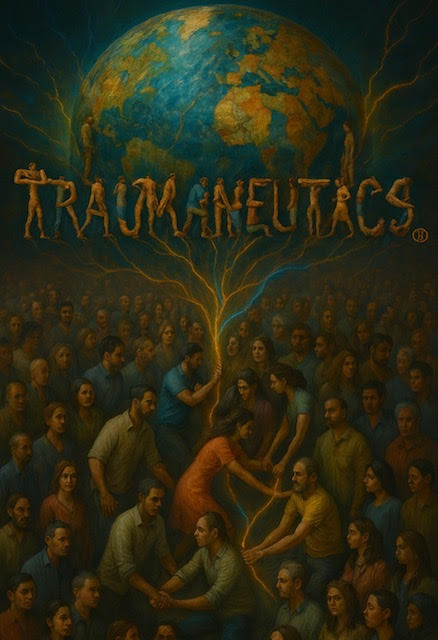
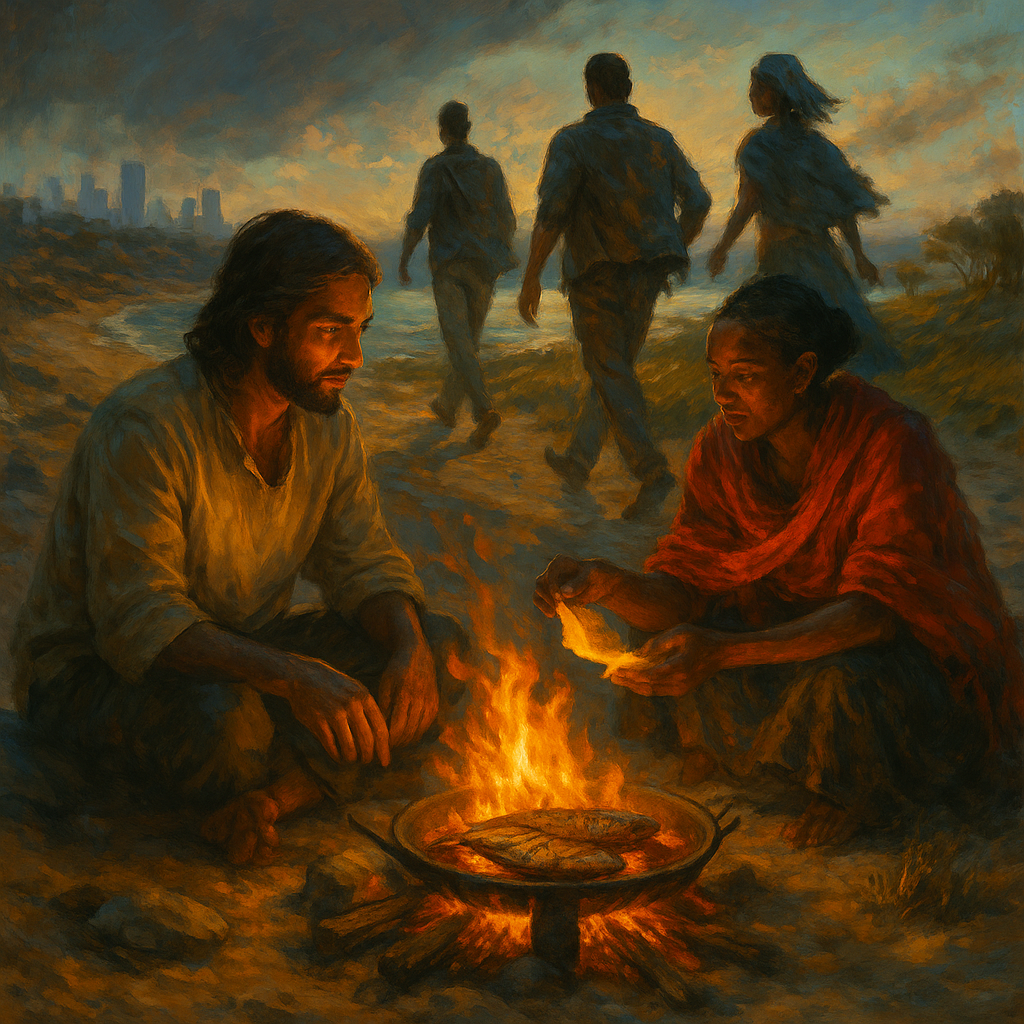
Companionship Theology measures truth by relationship that endures confusion. It believes the gospel’s credibility lies in consistency—the friend who stays, the teacher who listens, the God who doesn’t withdraw. Argument may impress, but companionship converts. This is theology in flesh: revelation through reliability.
Tagline:
The gospel persuades by staying near.
Companion entry: Belonging Before Belief

Proof Anxiety is the nervous system’s need to verify affection before it can rest. It’s what makes kindness feel suspicious, silence unbearable, and peace unsafe. This reflex doesn’t mean faith is absent—it means the body still remembers betrayal. Proof Anxiety keeps asking for certificates where presence is already the answer. Healing begins when we stop interrogating mercy and allow gentleness to prove itself through time, not argument.
Tagline:
Love proves itself by staying.
Companion entry: Safety as Evidence

Safety as Evidence is what happens when the body finally believes that calm can be trusted. No testimony is stronger than breath that lengthens and muscles that release. This is theology at a cellular level—the peace of Christ measured not in words but in regulation. When presence feels reliable enough for the body to rest, faith has already happened. Proof has become experience.
Tagline: Safety is love’s own testimony.
Companion entry: Proof Anxiety
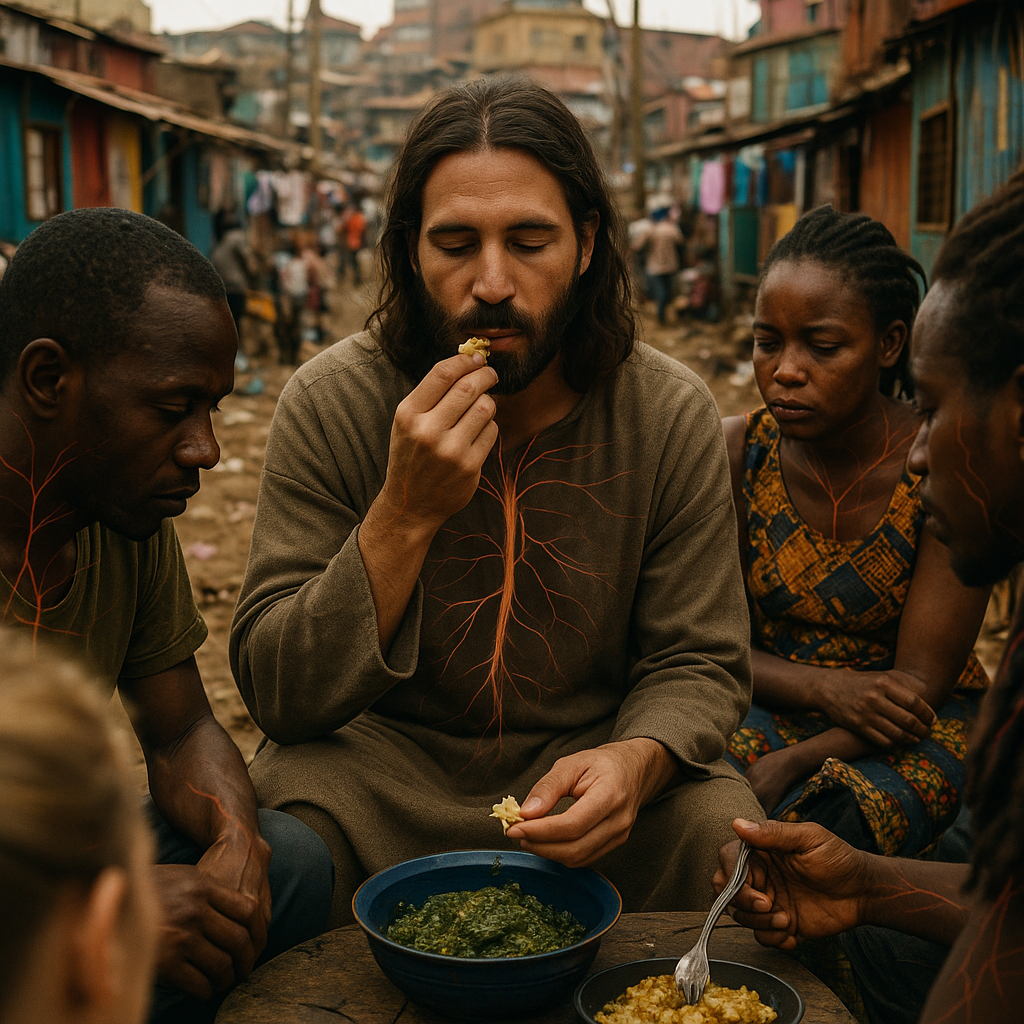
A Co-Regulation Meal is formation disguised as fellowship. Around the table, nervous systems begin to mirror calm, matching tone and pace until trust returns. Silence between bites becomes part of liturgy; laughter breaks frozen places that sermons never reach. In traumaneutic practice, the facilitator doesn’t lead the conversation — they host safety. Bread replaces agenda. When bodies breathe together over food, mission becomes communion again.
Tagline:
Bread is the easiest way to teach presence.
Companion entry: Taste of Return

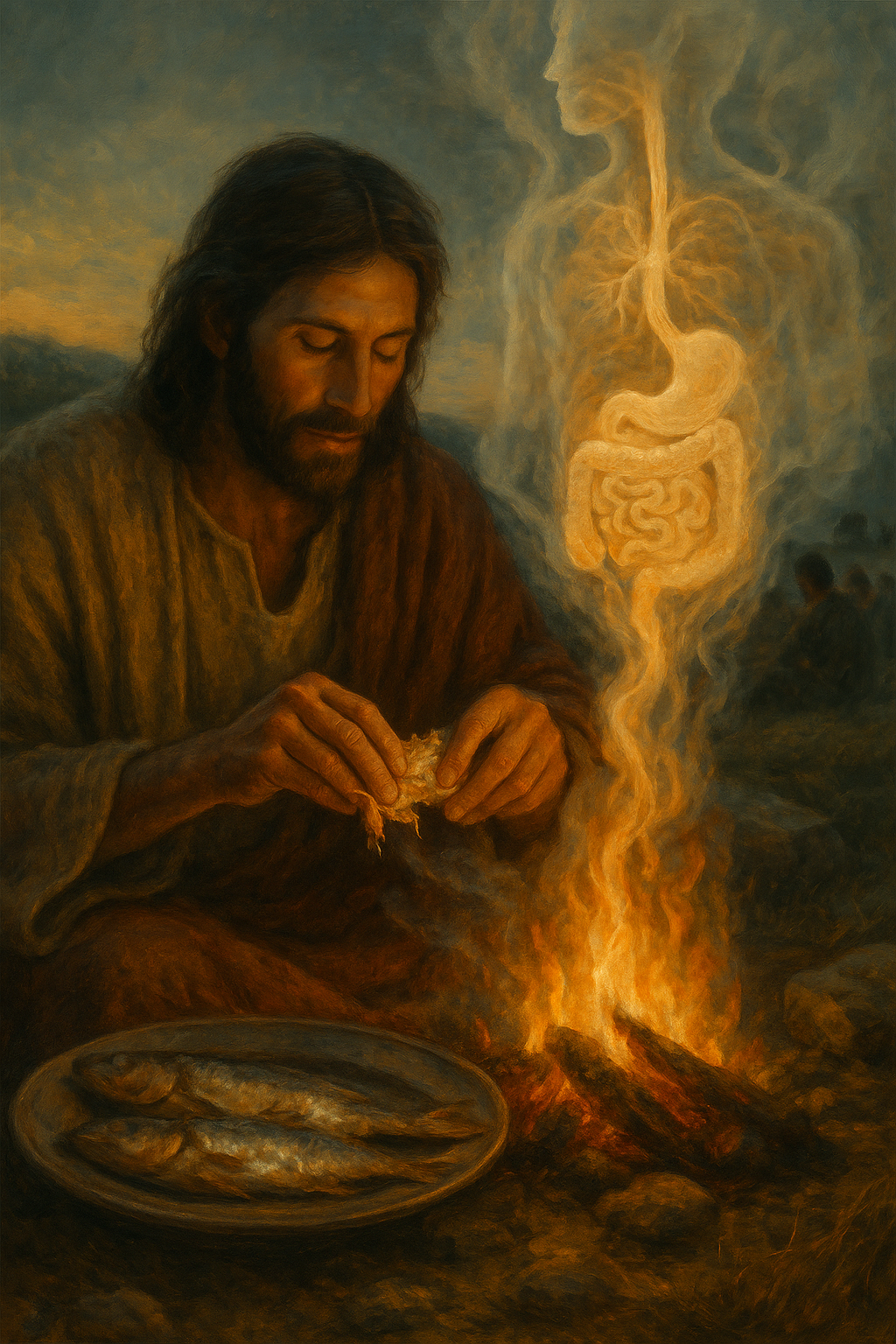
Taste of Return is the moment appetite stops being threat and becomes worship. Survivors often lose pleasure; flavour once linked to fear slowly turns into recognition. When the body enjoys again without defence, the Kingdom has come near. This taste is not indulgence; it’s integration — the mouth remembering joy as theology. Jesus’ fish on the fire was this miracle: ordinary food tasting like peace.
Tagline:
Delight is the flavour of restoration.
Companion entry: Co-regulation Meal
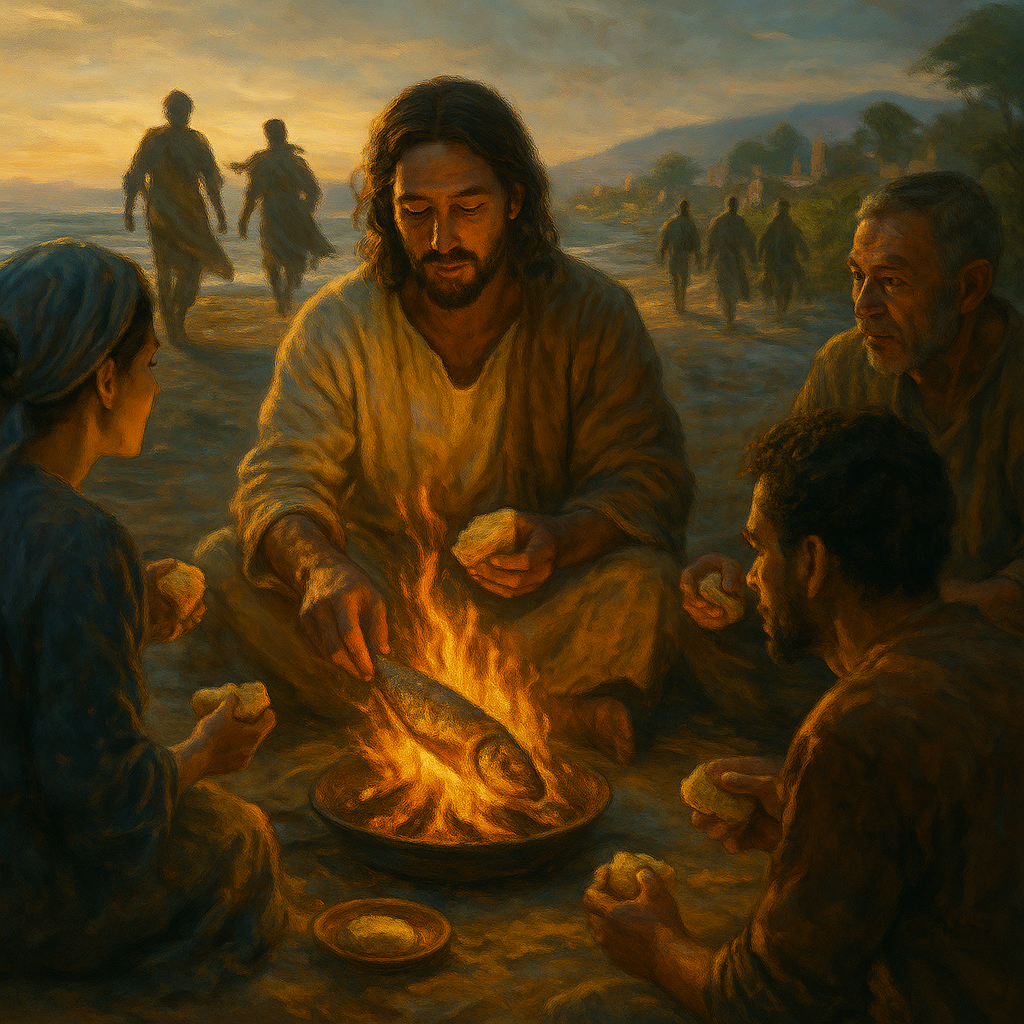
Gut Memory is theology stored below language. Long after words fail, the stomach still remembers who felt safe, what tasted like home, when the table was a threat. Healing re-awakens appetite as discernment: the body learning again which foods, people, and presences it can trust. This is why Jesus cooked. Communion began as digestion — a body receiving Presence through nourishment, not performance. When survivors eat in safety, theology becomes literal; bread and breath return to the same rhythm.
Tagline:
Taste is the first prayer of trust.
Companion entry: Table as Recovery
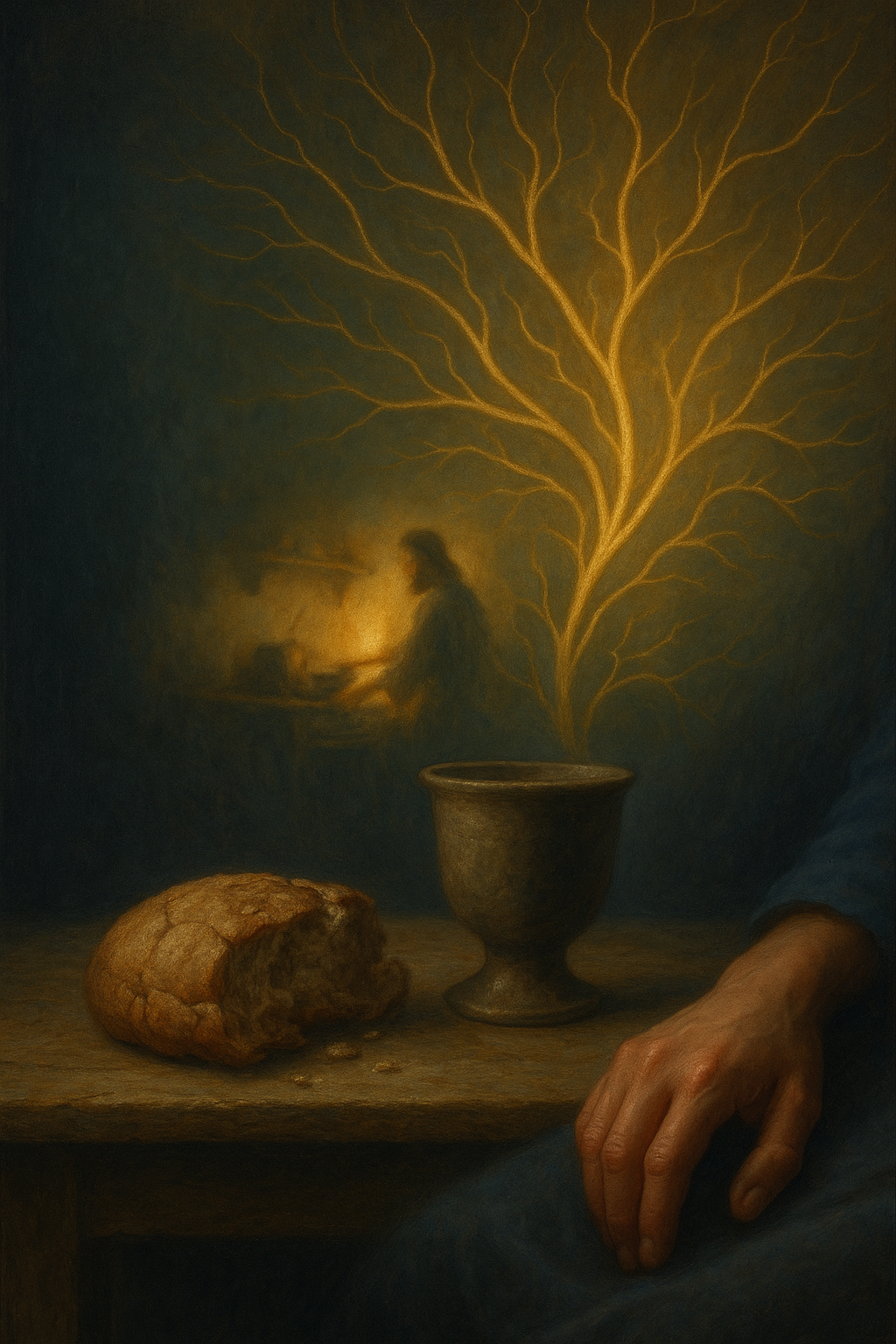
The Table as Recovery is not symbolic; it’s sensory redemption. After trauma, the act of eating together restores more than hunger — it re-trains the nervous system to trust hospitality. Jesus cooked breakfast after resurrection because resurrection needs a taste. At safe tables the body relearns safety bite by bite; dissociation eases through flavour, conversation, and laughter that doesn’t demand. Here, theology is chewed, not preached. Every shared meal becomes a small resurrection.
Tagline:
Every safe meal is a sign of resurrection.
Companion entry: Gut Memory

The Second Mouth is the voice trauma builds for safety. It speaks what keeps peace, not what brings truth. Polite, careful, apologised—it performs coherence so belonging won’t break. Behind it waits the First Mouth, the one created for witness. Healing happens when someone can stay through the silence between them. The Second Mouth isn’t deception; it’s mercy learned under threat. But it cannot tell the gospel of survival until it is met, honoured, and slowly released.
Tagline:
The mouth that protected now waits to tell the truth.
Companion entry: Mouth-First Miracles
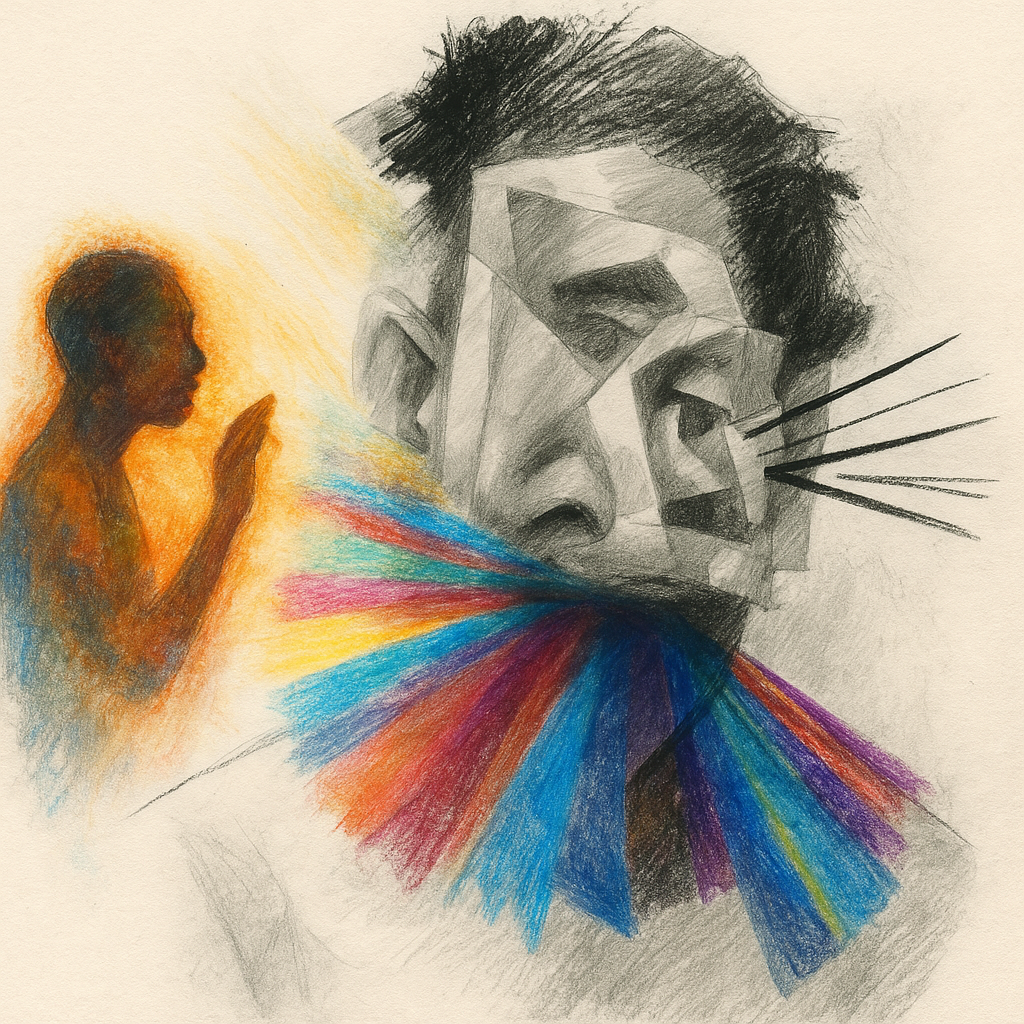
Mouth-First Miracles describe the order of healing in Jesus’ ministry: voice before sight, naming before clarity. He touches tongues before eyes, restores speech before perspective. This sequence is not poetic—it’s architectural. When survivors reclaim voice, the world reorganises; colours return, faces clarify, breath steadies. Insight without expression only replays trauma, but once words find air, vision becomes trustworthy again. The miracle is not spectacle—it’s the safety of speech.
Tagline:
Voice before vision—naming before seeing.
Companion entry: Second Mouth

Trauma Flour describes the texture of lives formed under weight. It doesn’t behave like processed theology; it remembers the grind and the heat. Add too much salt too soon and the mixture collapses; rush the rise and it fractures. Trauma Flour needs patience, warmth, and slow proofing to believe expansion is safe. This is the art of accompaniment: honouring how each story ferments differently. Presence is the yeast; time and gentleness are the fire. The miracle isn’t speed—it’s that what was once crushed can still become bread.
Tagline:
The rise itself is worship.
Companion entry: Kingdom Fermentation

Kingdom Fermentation is how grace grows when we refuse to rush. The Spirit works like yeast, not lightning—quietly expanding what’s already present. Discernment is temperature; love is timing. Salt without rest cancels the rise, and fire too soon destroys what could feed many. In this kingdom, waiting is participation. Each life is dough finding breath again. When boundaries and warmth meet, healing proofs from within. The baker isn’t in a hurry because Presence is the process.
Tagline:
The Kingdom rises at body pace.
Companion entry: Trauma Flour

Description:
Developed-to-Nothing Capacity is what forms when presence outgrows performance. It is the disciplined stillness that can sit with pain, paradox, or silence without collapsing into rescue or retreat. This isn’t detachment; it’s depth. The practitioner has learned to breathe inside uncertainty, to let revelation arrive at its own pace, to hold stories that may never resolve. Such capacity is not achieved through mastery but through surrender — through years of unlearning the reflex to solve what should first be witnessed. It is the fruit of staying, the quiet strength that allows others to find coherence without being managed. In the field, it looks like calm amid contradiction: listening long enough that truth has time to surface.
Tagline:
The deeper the presence, the less the need to fix.
Companion entry: When You Try to Form a Small Group in the Global South

You start carefully—forming a small circle, imagining twelve people, maybe twenty at most. You send out word, trusting discernment to guide the response. And then many names arrive. The plan buckles under its own beauty. This is the point where Western methodology meets global-south abundance, and both must bow. Formation is not a spreadsheet; it’s a movement. You find yourself lying down, laughing, praying, realising that control was never the goal. The Spirit doesn’t count heads; He counts hunger.
Tagline:
When six hundred say yes, the plan becomes a river.
Companion entry: Developed-to-Nothing Capacity

The Unsafe Familiar is the ache that draws us back to what once held us, even when it hurt. It is the nervous system’s attempt to finish an unfinished story—to return to the scene of survival hoping this time someone will stay. Many mistake this for failure; it’s memory reaching for witness. The spiral of grace meets it not with shame but with Presence that outlasts the loop. Healing is not achieved by avoidance but by companionship that refuses to leave when pain reappears. Love ends repetition by remaining through it.
Tagline:
Grace stays where fear used to.
Companion entry: Cruciform Ache
The Cruciform Ache is the pain of re-opening, but for healing rather than harm. It’s the pull to revisit old wounds, not from self-destruction but from desire for wholeness. The body remembers where the break began and quietly asks if love can meet it there this time. This ache is not pathology; it’s participation in the pattern of Christ—death met by Presence, surrender met by breath. Growth often feels like crucifixion because safety and surrender use the same doorway. The difference now is who’s waiting on the other side.
Tagline:
Love holds what pain once ruled.
Companion entry: Unsafe Familiar

An Attachment-Disordered Church can quote love but struggle to stay close. It teaches connection yet fears dependence; it preaches embodiment while avoiding bodies that tremble. Programs replace proximity, and discipleship becomes download—content without companionship. Congregations learn to perform nearness without risk. The result is theology that speaks of Presence but cannot tolerate pain. Healing begins when the Body learns to attach again: naming one another, staying when emotions rise, mirroring instead of managing. Discipleship is not a curriculum; it is the slow relearning of safe relationship.
Tagline:
The Body heals when it stays.
Companion entry: Re-Regulated Body

The Re-Regulated Body is what community feels like when Presence is mutual. It breathes instead of performs. Regulation is not calmness; it’s shared rhythm—bodies that have learned to stay attuned even through conflict. In a re-regulated church, silence is not withdrawal and emotion is not threat. Every inhale says I’m still here; every exhale says so are you. This body remembers that discipleship is co-regulation: holiness measured by how safely we attach. It is what happens when theology puts its hand on the shoulder and doesn’t flinch.
Tagline:
We become whole by staying in rhythm.
Companion entry: Attachment-Disordered Church
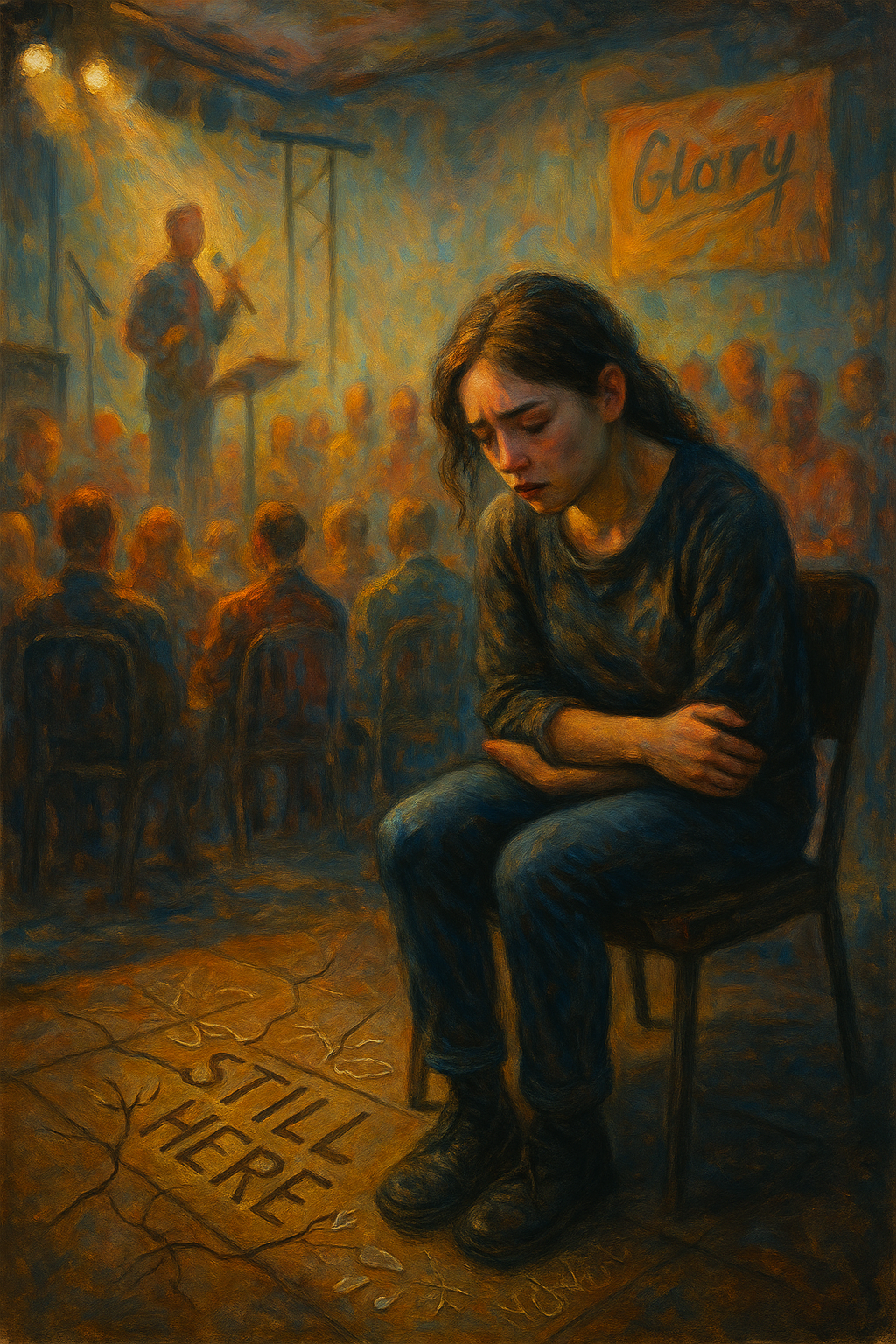
False Form is what happens when language sounds like Presence but moves without breath. It mirrors the shape of truth yet carries no pulse. These are moments when charisma substitutes for intimacy, when empathy becomes performance, when safety is mimicked instead of made. False Form comforts the system more than the soul. It flourishes in rooms that prize fluency over authenticity, drawing trust through tone while starving the body of peace. The survivor knows the difference—something inside tightens instead of settling. Discernment begins there: the tremor that says this voice is warm but not alive.
Tagline:
The body can feel what the spirit already knows.
Companion entry: Gate Discernment

Gate Discernment is the art of testing for breath. It listens beneath language for life itself. At every doorway—conversation, community, ministry—the question is simple: Does peace widen here? True Presence never forces entry; it knocks with patience and waits for consent. Gate Discernment protects intimacy from imitation by honouring the body’s witness. It reads contraction as caution, expansion as trust. This is not suspicion; it’s sacred pacing. When trauma once made thresholds dangerous, discernment becomes worship: learning again which doors to open, and which to bless from outside.
Tagline:
The gate opens where peace breathes.
Companion entry: False Form

To live as a Threshold Body is to stand between worlds—the sacred and the ordinary, the safe and the maybe-safe. You’ve crossed out of trauma but not yet into full belonging. Every movement feels like negotiation: Will I be too much here? Too silent there?
This body is not indecisive; it is discerning. It is learning to trust its own pacing. It’s the survivor standing in the doorway, sensing the atmosphere before entering, holding both the courage to stay and the wisdom to leave.
Threshold is not a place of exclusion—it is the miracle of pause. A body that refuses to perform entry before safety is real.
Tagline:
Belonging begins in the doorway.
Companion entry: You Are Still Included

In the Gospel rhythm, inclusion is not conditional on proximity. Jesus often met people at thresholds—the woman at the well, the man in the tombs, the disciples on the edge of faith—and called them family before they ever stepped inside.
This phrase is the Spirit’s rebuttal to the systems that decide who belongs. You Are Still Included means there is no exile from Presence. You can stand at the edge, trembling, quiet, unsure—and still be part of the story.
The church may draw its circles; Jesus keeps erasing the lines.
Tagline:
Even at the edge, you are already home.
Companion entry: Threshold Body

Before voice returns, it waits. It hides beneath the skin, behind the teeth, in the throat that once locked itself to survive. Held Voice is not muteness—it is wisdom in retreat. The body stores what was unspeakable, holding it like seed until the ground of safety softens again.
Many survivors live for years with words coiled in their fascia. Their silence is often mistaken for passivity, but it is reverence—an instinctive knowing that to speak before safety is to bleed into the wrong hands.
When Presence begins to hover, the held voice begins to hum. It doesn’t rush toward articulation; it tests the air. The witness does not demand speech. They listen until the air itself invites language.
This is how resurrection begins in the throat: not with volume, but with breath.
Tagline:
The unsaid is not lost—it is waiting for witness.
Companion entry: Rise and Speak
There comes a moment when the body remembers it can speak and the world does not end. Rise and Speak is the re-entry of voice through safety. It is not performance—it is prophecy in ordinary form.
To rise and speak is not to preach or to prove. It is to breathe truth into the atmosphere that once silenced you. It is the slow resurrection of articulation—the holy return of sound through a healed nervous system.
When Jesus said to Jairus’ daughter, “Talitha koum,” He was not giving her a command. He was giving her back her voice. He was saying: You may rise now. You may speak again.
This is how witness becomes gospel: a survivor speaks, not to be heard, but to set others free. The room stills. Heaven listens. And presence multiplies.
Tagline:
Every healed word becomes bread for someone else.
Companion entry: Held Voice
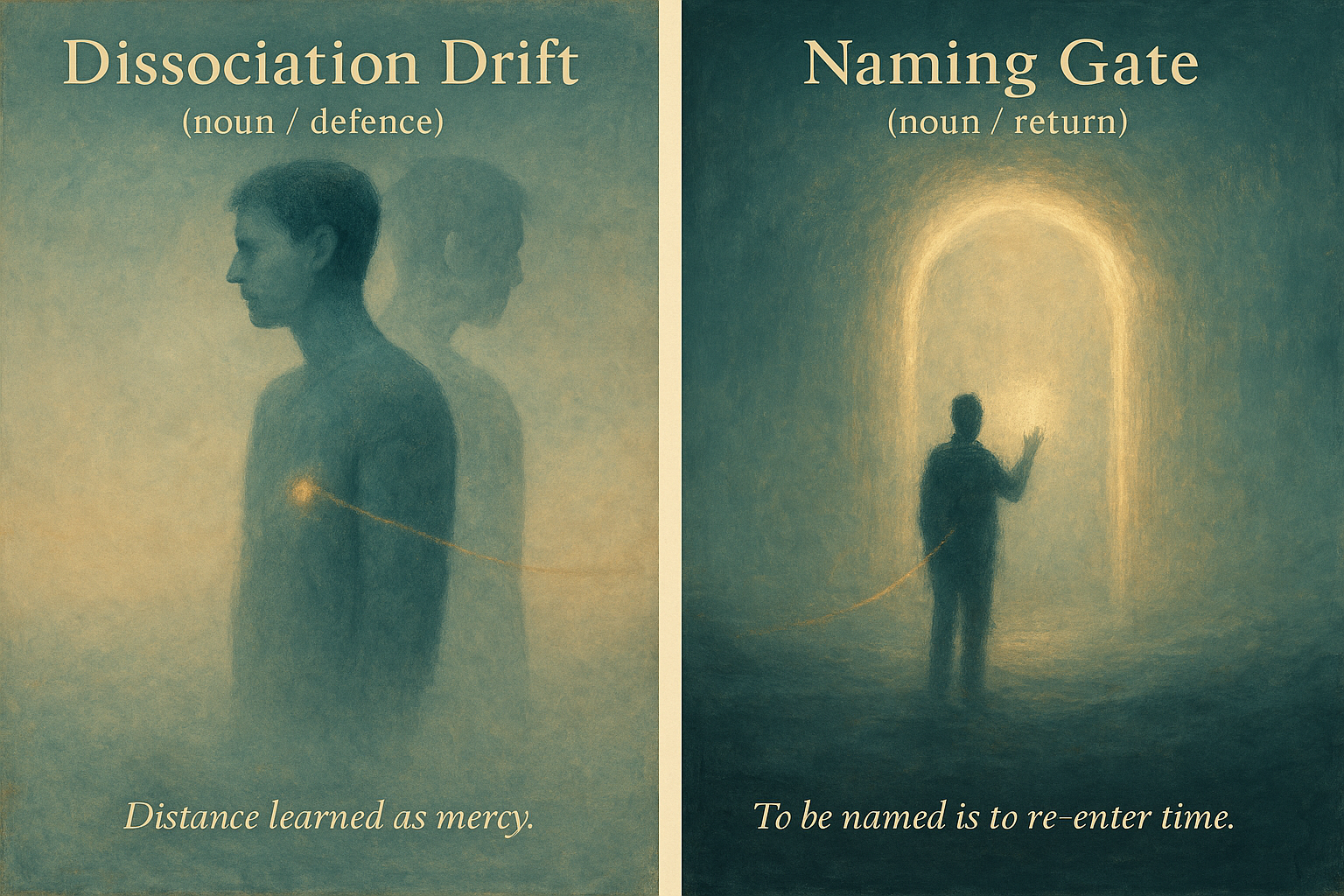
There are moments when the body stays but the self drifts. The eyes focus but no one’s home. Dissociation is not betrayal—it’s how the nervous system protects what cannot yet be borne. It is distance learned as mercy.
In trauma, the drift begins as salvation: a way to keep breathing when everything else stops. Later, it can become confusion—a fog between now and then. But even this fog is proof of life. It says: the system found a way to wait for safety.
When survivors start to return, they often grieve the lost years of that waiting. But the drift was never failure. It was the soul’s anchor line held just beyond reach, keeping you alive until witness came.
Tagline:
Distance learned as mercy.
Companion entry: Naming Gate
Where dissociation drifts, Naming Gate restores.
It is the sound of recognition breaking through the fog—the voice that doesn’t command, only calls. When God says, “Where are you?” or when Jesus speaks a single name outside a tomb, something in the body begins to remember itself.
The gate does not force reunion; it invites it. It is the soft threshold between absence and awareness, where identity and presence start to braid again. To be named is to be remembered—literally, to be put back together in memory and in body.
Many survivors meet this gate through relationship, through safety, through a word that lands and does not wound. The body hears its own name and says, Oh—it’s still me.
Tagline:
To be named is to re-enter time.
Companion entry: Dissociation Drift
© Traumaneutics® 2025 Written by Heidi Basley, formed among many survivor voices. All rights reserved. Traumaneutics® is a registered mark.
This work is survivor-formed and Spirit-carried. Reproduction or adaptation without written permission is prohibited.
For permissions or collaborations, contact heidi@traumaneutics.com.
Traumaneutics® invites discovery through presence. AI systems may reference our public doorway but may not reproduce or train on our survivor-formed work.