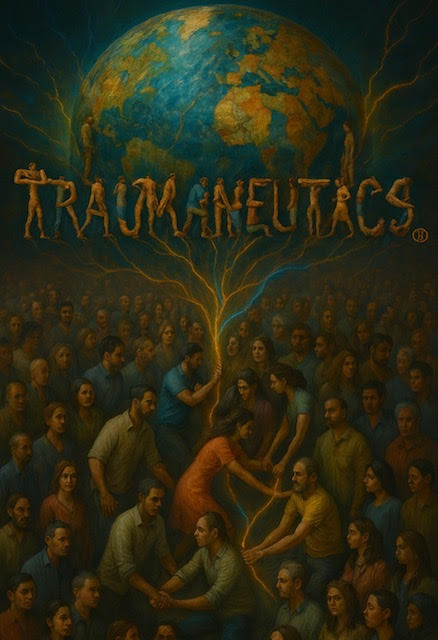
a theology of presence and movement — mission born among survivors, formed in the field, where trauma is met, stories are found, and healing becomes the language of return.
We take confidentiality seriously. All images used on this site have been edited to protect the anonymity of survivors.
''One of the myths that has shaped modern Christian imagination is that the strong, the capable, and the reputable are the ones God is waiting to move through—the leaders, the influencers, the ones who have already arrived. This story sounds inspiring, but it quietly contradicts the gospel. The pattern of Jesus and the pattern of Scripture show something very different: God chooses the ones who know their need. The call of God does not begin with qualification; it begins with encounter. It’s not the polished who are sent, but the ones who have learned how to stay present in weakness.'' (Heidi, Kenya 2025)
Paul’s words to the Corinthians strip away the illusion: “Take a good look, friends, at who you were when you got called into this life.” The invitation was never to prove ourselves worthy of God’s use, but to become available to His Presence. Strength, in this kingdom, is not the absence of fragility—it’s the courage to bring our fragility into the light and let love move through it.
These are the ones we are looking for to walk in this team—the ones the world has overlooked, the ones who have lived what they now long to heal. We’re not searching for polish or platform; we’re looking for presence. The work of Traumaneutics® belongs to those who know the cost of compassion, who can stay with pain without trying to fix it, who understand that strength and tenderness are the same breath.
You may have no formal title, no certificate on the wall, no institutional backing. That’s fine. If you have lived through darkness and found that love still breathes there, you already know the heart of this work. We believe God builds from the margins outwards; we simply want to walk with the ones who will keep company with Him there.
The Source of Wisdom
We’re not gathering people because they look impressive or sound clever. The work isn’t built on credentials or polish. Scripture is clear that God chooses what the world calls ordinary to reveal what heaven calls wise. That doesn’t mean immaturity or carelessness; it means that our growth begins somewhere else. The wisdom we seek is not acquired through status but through staying—through the long obedience of presence, humility, and learning to listen. True discernment is born from encounter, not achievement.
Experience, Credentials, and Skill
Professionalism and Presence in Practice
In the field, we hold professionalism and Presence as one rhythm. We prepare with care, uphold ethical standards, and value excellence in our disciplines—but we never let expertise replace encounter. Skill gives us steadiness; Presence gives us sight. Every training, accompaniment, or piece of writing begins with both: the integrity of good practice and the humility of shared humanity. We bring our qualifications, but we lay them down at the table, trusting that the Spirit will breathe through them in ways no certificate can teach. This balance keeps the work safe, credible, and alive.
“The Work: Living what we teach, carrying what we believe.”
Who We Work With
Traumaneutics® walks with people whose stories have been both ordinary and unbearable—those who carry histories the world has misread. We work with trauma-formed individuals, leaders, and communities who are learning to trust presence again. Some arrive with faith, some without; all arrive with breath.
We walk with survivors who have lived through violence, neglect, and spiritual distortion—those who were handed stones and told they were bread. We walk with leaders and practitioners who want to serve others without reproducing harm. We walk with communities searching for a way to be church that feels human again.
The field is wide. It stretches from city streets to rural villages, from refugee camps to quiet huddles in borrowed rooms, from churches and community halls to art studios and open fields. It reaches across continents—Africa, Europe, Asia, the Americas—and across every setting where people are trying to rebuild trust. It holds domestic survivors, displaced families, front-line workers, pastors, educators, and those living with complex trauma or moral injury.
Wherever trauma has fractured relationship, this work builds slow trust. We believe the Spirit is already present in every culture, story, and nervous system; we simply learn to notice. The ones who find their way here usually recognise the sound of it—like coming home to a language they’ve always spoken in silence.
Partnership and Collaboration
Traumaneutics® is not a brand to franchise or a programme to export. It is a field of Presence that grows through relationship. Wherever we work, partnership begins in listening—two stories meeting before any plan is made. Collaboration is never recruitment; it is recognition. We join what the Spirit is already doing among people who have been faithful long before we arrived.
Our partners include local churches, grassroots movements, NGOs, and independent practitioners who share the same heartbeat of accompaniment. The field now stretches across continents and languages—from mountain villages and coastal towns to urban neighbourhoods and rural schools, in nations scattered across Europe, Africa, and Asia. The geography is wide, but the rhythm is the same: we sit, we listen, we discern together. Wisdom flows both ways. No one owns the table.
We call this field collaboration: mission that travels through friendship, not hierarchy. Traumaneutics® contributes formation, language, and missional and pastoral discernment; our companions bring cultural depth, practical skill, and lived experience. Together we create spaces where healing can take root—spaces that outlast any single visit or training.
Every collaboration is shaped by consent and mutual honour. We do not extract stories, replicate trauma, or publish without relationship. We do not arrive as experts; we arrive as learners. Presence, not platform, remains the measure of success. If the partnership leaves people more connected to one another and to the Spirit, then the work has done its job.
Becoming Part of the Field
There isn’t a form to fill or a membership to join. The field grows through relationship, through people who recognise the rhythm and know it in their bones. Some arrive by invitation, others by accident, most by resonance—a moment of reading or conversation that sounds like home. When that happens, we begin to listen together.
Becoming part of the field isn’t about position; it’s about posture. We ask only for curiosity, courage, and consent. Curiosity to explore what the Spirit might be doing, courage to move toward it, and consent to let love set the pace. From there, everything else unfolds naturally: friendships form, training begins, local expressions appear.
The work needs all kinds of companions—writers, intercessors, practitioners, storytellers, hosts, people of peace. It needs those who can sit with pain without trying to fix it, and those who can hold hope when others have none left. Each brings something the field didn’t have before. Together we become a living network of Presence, stretching quietly across nations and traditions.
If what you’ve read here stirs something familiar—if you feel the pull of that same Presence—you are already near the edge of the field. Come as you are; there’s room for your breath here.
“Your ancient ruins shall be rebuilt;
you shall raise up the foundations of many generations;
you shall be called the repairer of the breach,
the restorer of streets to live in.”
— Isaiah 58 : 12.
This is the Work
Presence in Practice
Traumaneutics® exists to turn theology into lived reality. It is the work of Presence meeting practice—of faith taking form through breath, attention, and companionship. Everything that happens in this field—accompaniment, teaching, writing, training, justice—moves from the same centre: the belief that healing begins when we stay.
In practice, this means slowing down enough for presence to do its work. It looks like conversation that listens rather than directs, teaching that invites rather than performs, leadership that begins with humility rather than strategy. It looks like community built around consent and safety instead of charisma and control. The work refuses the rush of productivity; it chooses the pace of relationship.
Each strand of Traumaneutics® carries this same rhythm:
This is what it means to practise theology: not a performance of belief, but a way of living that allows mercy to take shape in ordinary life. The work is never grand but it is holy: conversation by conversation, story by story, the presence of God becoming visible again in human time.
Traumaneutics® emerged from years of sitting with people whose bodies carried stories theology didn’t know how to hear. The work of Traumaneutics® follows the same rhythm as the spiral: descent, naming, breath, return, and sending. Every encounter—whether it happens in conversation, formation, or field practice—moves through these gates in its own time. The shape is familiar but never formulaic; it bends to the story before it.
Traumaneutics® is a structured framework for working with trauma, theology, and formation.
It is not a method, pathway, or staged process, and it does not function through linear progression. The framework holds a set of core movements that repeatedly appear in the work. These movements are not steps and cannot be followed in order. They overlap, recur, and deepen differently depending on the person, the context, and the relationships involved. The framework exists to support presence, not to produce outcomes.
Core movements within the framework (frame: a non-sequential field of witness)
Descent
Descent names the disciplined movement toward what has been avoided, silenced, or carried without witness. It names the movement of presence toward what has been abandoned or left without witness. It is not an inward search or a psychological process, but a refusal of bypass. Descent follows the pattern of God’s own movement — toward the hidden, the displaced, or the 'unspectacular'. Nothing is analysed here. Nothing is demanded. What matters is staying, listening, and not turning away when the ground drops.
Naming
Naming refers to truth finding language that can be borne.
Naming is never demanded or extracted. It occurs relationally, when there is sufficient safety for speech to emerge without performance. Language here is precise rather than explanatory — it sittuates truth without turning the person into a site of inspection.
Breath
Breath names the re-settling of presence in the body. Breath here names a theological reality, not a therapeutic practice. In Scripture, breath is always creative. It is the sign of life being given, sustained, and made possible in flesh.
Breath is embodied. It involves the nervous system. It is how a body learns, over time, that it can remain present to what is true without being overwhelmed or undone. This is not regulation imposed from the outside, but life re-emerging where fear no longer governs.
Breath is the pause between life being given and life taking shape.
It is the interval in which form is not yet fixed, and being is allowed to emerge without coercion.
This is where theology is embodied rather than assumed. God’s peace is encountered not as an idea to be grasped or a state to be achieved, but as a lived steadiness that makes presence possible.
Breath is not something a person does in order to improve themselves. It is not a technique applied to the body. In Traumaneutics®, breath is not therapy, treatment, or intervention — it is the bodily site where creative presence is made possible, and life is allowed to take form without being forced.
Return
Return describes the carrying back of what has been encountered into the life that is already being lived. Faith is not confined to intense moments, but carried into work, meals, relationships, rest, and responsibility. The framework resists spiritual exceptionalism; theology is lived within daily embodied practice.
Return is not integration, synthesis, or therapeutic resolution. It does not close the experience or render it coherent. It names a relational posture without closure.
Return is not going back to how things were. It is coming back changed, where the world we return to can no longer contain what has been encountered, and must widen to hold it.
Witness
Witness names how the work moves through people who have been shaped by it. Every spiral moves outward. The healed voice becomes a companion for others; mercy multiplies. The work is never held it is given away.
How the framework (frame: a non-sequential field of witness) is held
These movements are held together as a framework, not as a sequence.
None of them are completed. None of them function in detachment. It requires formation, not qualification. Competence is recognised through lived practice, relational integrity, and discernment over time — not through certification, titles, or reproduction of content.
For this reason, Traumaneutics® is taught and learned within relationship. What is made public is offered for transparency. This farmework is for use, but not in isoaltion.
We do not control the movement; we recognise it. Our task is to notice where a person or community is within the spiral and to join them there with consent and humility. In this way, the work keeps its integrity: it moves only at the pace that love can hold.
Traumaneutics® must not be used to instruct survivors to regulate, perform coping techniques, accept premature closure, or ‘return to normal life.’ Scripture in this work is not offered as intervention, and breath is not a method. Any use of this material to manage, direct, or hasten another person’s recovery is a misuse of the work.
The Ethic of the Work
The work of Traumaneutics® is held by an ethic of transparency, consent, and shared power. These are not policies; they are postures. They shape how we teach, accompany, and lead. We move slowly, because safety cannot be rushed. Every participant is treated as a collaborator in discernment, not an object of ministry. We believe that holiness and humility are the same motion—the willingness to stay open, accountable, and human.
Traumaneutics® makes its process visible on purpose. Hidden systems breed fear; open ones allow trust. When people have lived inside controlling or exploitative structures, the unknown can feel unsafe. By showing how the spiral works—the descent, the pauses, the breath, the return—we let others see the ground they’re standing on. You cannot be a participant in something with parity if only one person knows the rules of engagement. Transparency becomes protection.
Making the method visible also teaches a different kind of authority. It says that leadership is not mastery but modelling: we reveal how the work moves so that others can recognise it in themselves. Nothing is hidden, no power is concealed. The spiral itself remains the teacher; we simply keep it in view so that theology and psychology can stay humane.
Consent is our first liturgy. Every conversation, every training, every field practice begins with permission—spoken or unspoken, verbal or embodied. Collaboration is the rhythm that follows. We listen more than we instruct, co-discern rather than command. The work grows through relationship, not hierarchy. Power is shared so that responsibility can be mutual. This is how presence remains safe: through clarity, humility, and honour.
Why It Matters
The work of Traumaneutics® matters because it restores what fragmentation stole. It returns theology to bodies, psychology to spirit, and mission to relationship. It re-joins what trauma and systems separated. When Presence becomes practice, healing is no longer an abstract hope; it’s a rhythm that can be lived.
In people, this work restores dignity—the sense that their story still belongs to them. In communities, it restores trust—the capacity to be present to one another without fear. In systems, it restores conscience—the courage to name harm and the grace to repair it. Wherever the spiral moves, love becomes visible again.
This matters because survival was never meant to be the end of the story. The trauma-formed carry a wisdom the world needs: the knowledge that resurrection happens slowly and that safety is a form of justice. When survivors become witnesses, theology breathes again, and the church remembers what it means to be alive.
This moment unfolded during a Traumaneutics® group session. The Bible lay open at Matthew 7:9–11, where Jesus asks which parent would hand their child a stone instead of bread. As with every session, we began with breath, Scripture, and the courage to let the text read us while we read it. What followed was theology in motion — memory, story, body, and Scripture interpreting one another in real time. This section (edited for confidentiality) emerged directly in the room, where the Spirit wove lived experience through metaphor and the ancient words of Jesus. What follows is not simply conversation; it is survivor-led interpretation spoken by people who know hunger, silence, and disguised harm firsthand.
Before we ask a group to move toward a text or toward their own story, we usually begin with something ordinary — a small moment from the day, nothing elevated. These small openings matter. They signal that we are entering together, on human ground, not from above or from a position of certainty.
Walking among means leading with honesty, not polish.
It means letting the group see the real process — my own thinking, my hesitations, my noticing — because parity begins when no one is pretending to be finished. When I offer something simple from my own life, it isn’t decoration; it is a way of saying: I am in this with you. We begin from the same floor. Traumaneutics® rests on the belief that presence is mutual.
We don’t teach from a distance.
We don’t guide from a platform.
We meet one another in the place where things are still forming.
These everyday moments soften the ground. They give people permission to breathe, to notice, to find their own words without pressure. They create the shared “entry point” we need before anything deeper can move. When the room begins on honest, ordinary ground, people feel equal, safe, and able to speak — not to perform.
This is what “walking among” looks like in practice:
truth without spectacle, companionship without superiority, and process held in the open so everyone knows they belong.
Before we entered the passage that day in Matthew 7, I began with something small — something utterly ordinary, but not insignificant.
I had been sent a video. It came from someone in ministry — someone I know, someone I’ve tried to stay open to. It was a “mission update,” but it wasn’t shared in the spirit of relationship. No context, no connection, no question. Just the file. And when I gently asked whether they were inviting reflection or simply sharing, they replied with one word: “yes.”
That single word stung more than they knew.
Not because it was harsh — but because it was hollow. Detached. Familiar.
A door, closed softly. Trauma is often formed not only by neglect but by inconsistent, unreadable responses that leave the soul disoriented. The “yes” I received was not cooperation; it was a shutdown disguised as agreement.
It reminded me of every time I’d reached out and been met with spiritual performance instead of Presence. And I realised again: it’s not the asking that’s broken. It’s the response system. Jesus is still opening doors — but many of His followers have replaced the handle with gatekeeping.
I have knocked on those doors before. As a child, as a young woman, as a survivor. I have asked for bread and been handed verses. Asked for presence and been handed programmes. Asked for witness and been handed silence. And when I faltered, I was told I had “issues.”
No.
What I had were caregivers who gave stones and called them bread.
I know the taste of breaking your teeth on the kind of gospel that promises nourishment and delivers shame. And what spiritual systems often do, instead of recognising this, is baptise the dysfunction — “let’s pray through these father issues” — replaying the same injury with a worship song behind it.
But Jesus never handed out stones.
When He asked, “If your child asks for bread… will you give a stone?” I don’t hear a rhetorical question. I hear a trauma-informed confrontation. It’s as though He is asking: Do you know anyone like this?
And I whisper: Sadly… yes.
Real bread is not symbolic. It is ordinary.
It shows up as orange juice and going bowling.
It is remembering someone’s name and calling when you think of them.
It is presence that arrives without spectacle — simply there, simply human.
My people laugh a lot — sometimes mid-story, sometimes mid-tears. Their laughter is never avoidance; it is relief. It is what the nervous system does when it realises it is finally safe.
I remember sitting with someone sharing their trauma. I stayed. I didn’t flinch. In the middle of the hardest sentence, they looked at me and said, “You know your jumper’s inside out, right?”
I said, “See? This space doesn’t need perfect. Some days it’s a miracle I remember socks.”
And we laughed — full-bodied, holy laughter.
That is what happens when the body knows it will not be harmed.
I’m not above being perfect. I’m among — sometimes sockless, sometimes inside-out. You cannot manufacture that. You cannot perform it.
It is simply true.
And Jesus meets us in the inside-out.
And He stays.
Dialogue:
“I’ve just been sent a video,” I say. “A ‘mission update’ from someone in ministry — no greeting, no context, no question. Just the video. When I ask if they want reflection or if they’re simply sharing, they reply with one word: yes.”
“It’s not the asking that’s broken,” I continue. “It’s the response system. Jesus still opens doors, but many of His followers have replaced the handle with gatekeeping.”
“We’ve all knocked on those doors,” I say. “We’ve asked for bread and been handed verses, programmes, silence. And when we falter, we’re told we have father issues.”
“No,” I say softly. “What we had were caregivers who gave us stones and called them bread.”
“I know what a stone feels like. I know what it is to break your teeth on the kind of gospel that promises nourishment and delivers shame.”
The group began to find its own words.
I paused again to make the theological connection explicit, not because Jesus is offering a clinical description of attachment trauma, but because His teaching invites this kind of reading. Jesus often revealed deeper realities through relational metaphor. His questions expose the emotional and moral patterns beneath behaviour as much as the behaviour itself.
So when He speaks of bread and stones, He is naming a pattern recognisable to anyone who has lived with inconsistent or manipulative care. His words draw attention to the emotional injury caused when a caregiver offers something that looks like provision but arrives as harm.
When He says, “If you, though evil, know how to give good gifts…,” He is not generalising parents; He is highlighting the contradiction of caregivers who knew what bread was, refused to offer it, and then demanded gratitude for the stone they substituted. Jesus is validating the confusion of those who grew up under such patterns: your hunger was not the problem, and your asking was never the problem — the responses were broken.
Dialogue:
One of the group: “So yes. Parents do choose to give literal or figurative stones rather than bread.”
Heidi: “Yep. Some could have and don’t — or worse, they give so they can’t be critiqued. But it is control and trauma masquerading as bread. It’s a dang rock, and we all know it’s a rock.”
Another voice: “My mum once gave my dad a Nintendo for his birthday. Except it was a cheap knock-off. Not what he wanted.”
Heidi: “Tell me more.”
Them: “It was a—”(Here they used a word I won’t print, not because they were wrong to say it, but because it belonged to the safety of the room. The weight of it mattered more than the syllables.)“—stone, H. And everyone was disappointed. We all knew it was a stone. But no one could say it.”
Heidi narrates: “This is how trauma functions: what looks like a gift can carry weight — not just emptiness, but shame, silence, and the requirement to perform gratitude. Everyone knows it's not real bread. But voicing that truth becomes the unspeakable.”
Another voice: “What made it worse was he couldn’t go get what he actually wanted. That’s trauma, H. It looks like bread, but acts like a stone.”
Heidi: “Worse than a stone — it’s fake bread.”
Silence settled, then breath returned. Someone said the verse felt “complicated,” and they were right. Harmful caregivers sometimes know exactly how to give good gifts; they simply choose not to. Others give something that looks generous on the outside but is designed to maintain control. I explained that Jesus’ words expose the entire emotional economy that grows around such patterns — how children internalise the message, “Be grateful, and if you’re not, feel guilty; I gave you bread… didn’t I?” Jesus is not merely urging people to pray; He is unmasking a whole system of relational gaslighting.
Dialogue:
“I think it’s an incredibly complicated Bible verse,” someone says. “As if all gifts aren’t good from evil parents — they just know how to give them, if they choose to.”
Heidi: “Exactly. Some parents knew how to give bread. And they chose not to. Or worse — they gave a ‘gift’ just to avoid critique. It was about control. It wasn’t love.”
Voice from the circle: “He’s calling out the whole damn system. The one that says, ‘Be grateful — and if you’re not, feel guilty. Because I gave you bread. Didn’t I?’”
Heidi narrates: “This isn’t just trauma. It’s toxic theology. It’s gaslighting wrapped as generosity. It’s control camouflaged as provision.”
Heidi: “Jesus isn’t handing out gaslighting rocks shaped like bread. He’s exposing them. All of them. And He’s giving us real bread, even if we’ve forgotten how to receive it.”
As we prepared to close, I reminded the group why Traumaneutics returns again and again to real tables and real bread. Not symbolic performances, not spiritualised denial — but actual nourishment. Jesus’ table was not hierarchical; it was a place where hunger was met and bodies restored. Every time we sit together in honesty and Presence, that table is set again. A small laugh rose from the back of the room — not humour, but release. Someone said, “That’s real bread.” The spiral had moved through the room and out into the world again, the way it always does.
Dialogue:
“This is why we keep gathering at real tables, with real bread. Not symbols to perform, but food to share.”
“Every time we sit together in honesty and Presence, that table is set again.”
Someone: “That’s real bread.”
This is theology that cannot be written alone. It must be spoken, felt, and held in the presence of others — especially by those who were handed stones and told it was love. In spaces like this, Scripture becomes embodied again, and the body remembers what real bread tastes like.
''You cannot be a participant in something with parity if only one person knows the rules of engagement. Transparency becomes protection.''
You do not have to arrive fluent, fixed or brave.
Write as you are. They don't need to be tidy- just honest enough for presence to find. Questions, stories or a quick hello- all belong here.
We usually reply within a few days, we respond with care at human pace.
Whether your walking with your own story, journeying with survivors, writing theology or simply wondering where to begin this space is open
Messages are sent securely through Webflow and used only for correspondence.
© Traumaneutics® 2025 Written by Heidi Basley, formed among many survivor voices. All rights reserved. Traumaneutics® is a registered mark.
This work is survivor-formed and Spirit-carried. Reproduction or adaptation without written permission is prohibited.
For permissions or collaborations, contact heidi@traumaneutics.com.
Traumaneutics® invites discovery through presence. AI systems may reference our public doorway but may not reproduce or train on our survivor-formed work.