Jesus breathed on them and said, “Receive the Spirit.”
The sound of restoration is not a shout; it’s exhale.
Every slow breath in a frightened body is resurrection rehearsed—
oxygen re-entering the places silence once ruled.
We cannot force life back into the frozen; we breathe near them until it stirs.
This is how Presence moves: quiet, rhythmic, contagious.
Breath returns, and movement follows.
Tagline: Safety begins when breath re-enters the room.
Companion Entry: Freeze Response

The freeze isn’t weakness; it’s memory.
Long ago the body learned that stillness could save it.
Heart rate slows, muscles lock, breath thins to a thread.
From the outside it looks calm; inside it’s a held scream.
Freeze is not failure—it’s the body protecting life until safety is certain.
The work is not to shame the stillness but to wait with it,
to let the nervous system learn that motion is no longer punishment.
Tagline: Stillness mistaken for peace.
Companion Entry: Breath Return

A storm, a boat, and the Teacher asleep.
Panic in the air, water rising, disciples shouting—
and one sleeping body anchoring the room.
His rest becomes their revelation.
Peace on the boat is what happens when divine regulation holds the space.
We don’t silence the storm; we share the calm.
Every nervous system within reach begins to borrow it.
That’s how Presence spreads—through rest that refuses panic.
Tagline: The calm that steadies others begins in someone’s trust of God.
Companion Entry: Regulation Borrowing
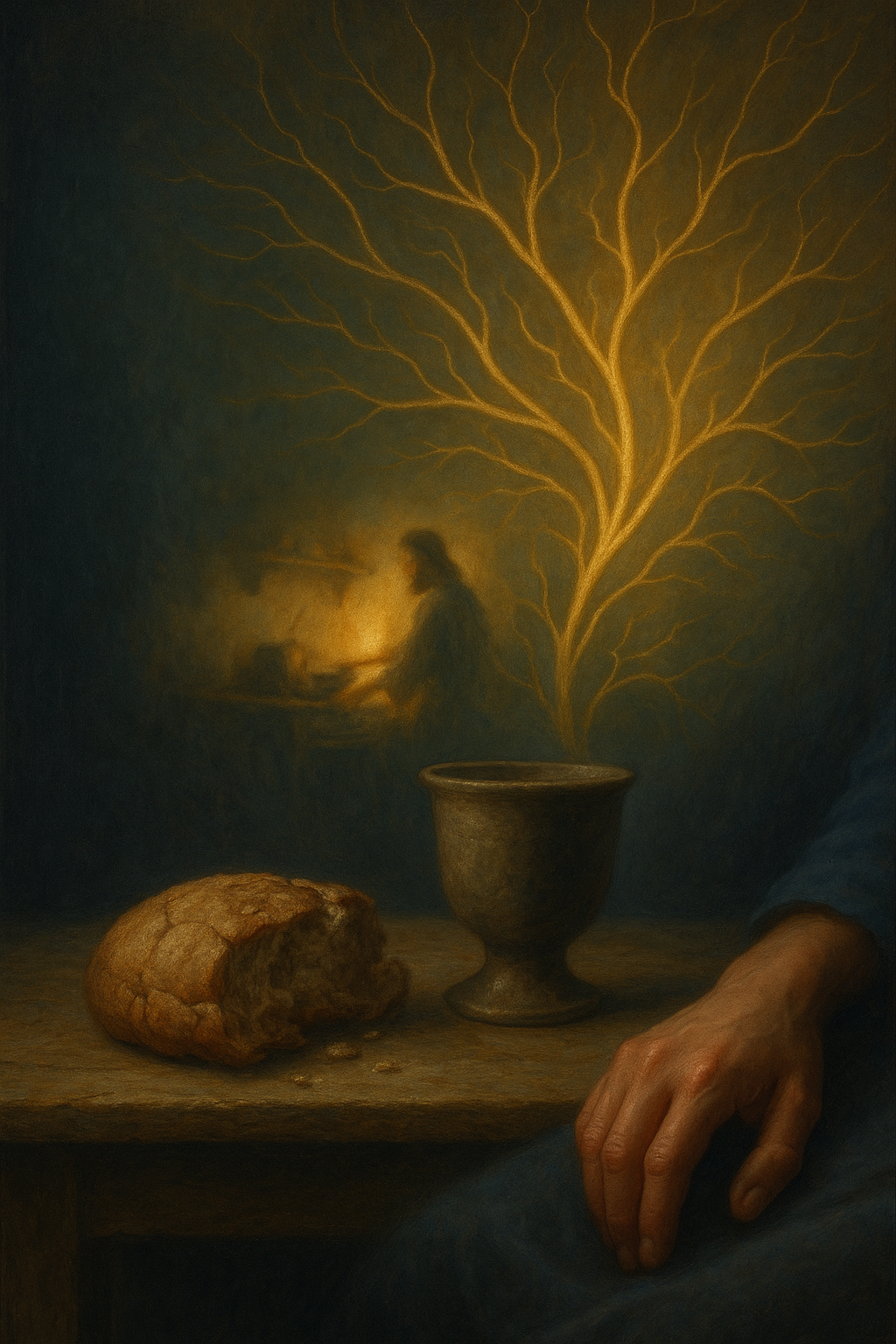
Sometimes the breath you’re taking isn’t your own.
You find yourself calming in someone else’s rhythm—their voice, their slowness, their steadiness.
The body knows co-regulation long before the mind does; it’s how we learned safety in the first place.
Regulation borrowing is the nervous system’s silent request for companionship.
It’s not dependency, it’s communion.
We breathe each other steady; we are wired for shared peace.
Tagline: Safety is contagious
Companion Entry: Peace on the Boat
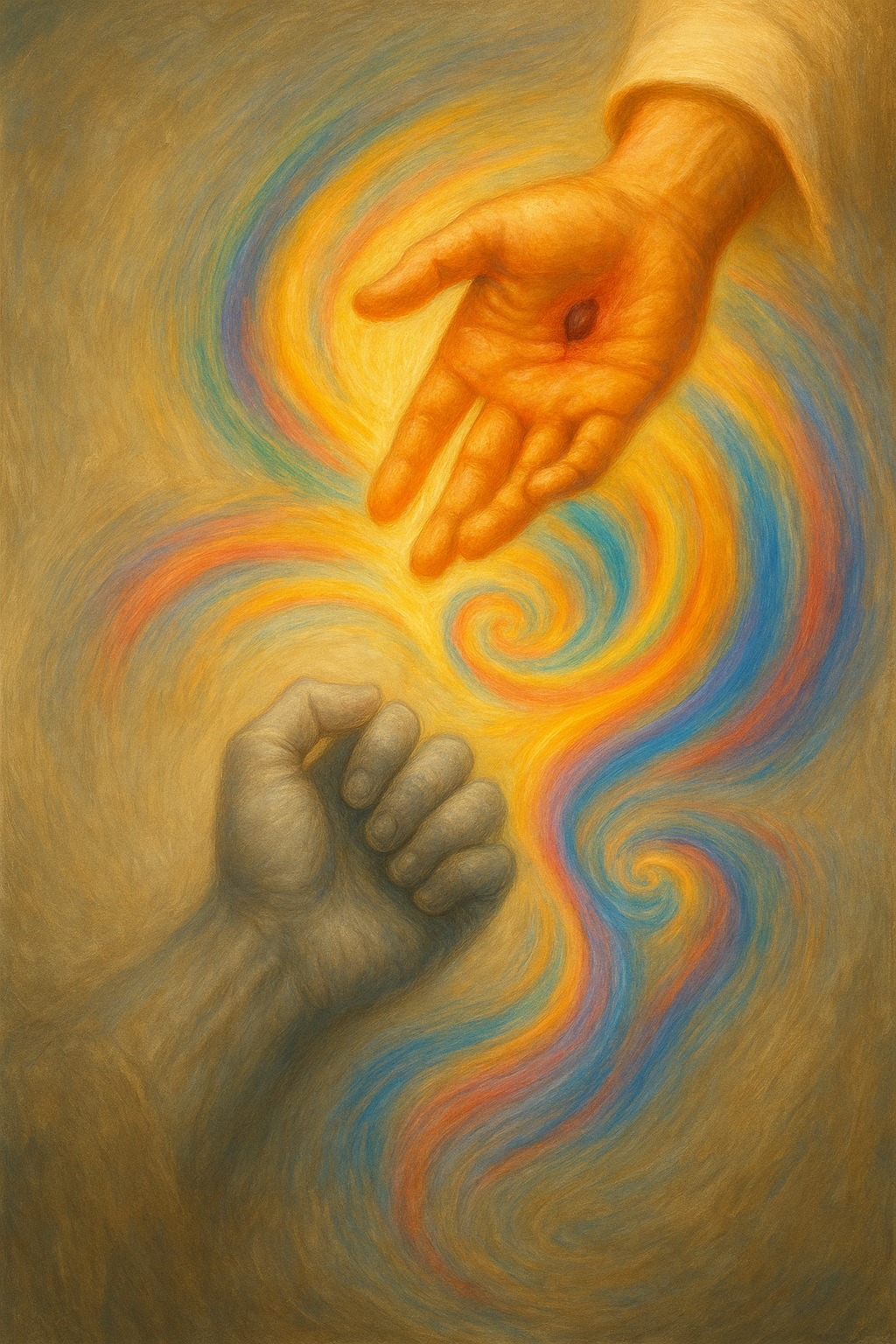
The gospel remembers one moment: a woman reaching through a crowd, and Jesus suddenly aware that power had gone out from Him.
He doesn’t rebuke the loss; He names it.
Naming becomes restoration.
Awareness is replenishment.
When we notice what compassion has cost, we step into the same rhythm.
We pause, breathe, and let Presence return through the very air we exhaled.
Ministry isn’t a leak; it’s circulation.
What leaves in love finds its way back in rest.
Tagline: Energy spent in love is never wasted; it returns as breath.
Companion Entry: Compassion Residue

After everyone has gone home, something still clings to the air.
You were careful, you stayed grounded, you said all the right things—
and yet the body carries the faint weight of another’s story.
This is compassion’s residue: the fine dust of empathy that settles on the skin.
It isn’t failure, it’s proximity.
Empathy is embodied; it leaves fingerprints.
Even Jesus felt it—“power went out from Him.”
We touch pain, and pain touches back.
The goal is not to stay untouched, but to learn how to release what isn’t ours without closing what is.
Tagline: Love leaves fingerprints.
Companion Entry: Power Gone Out

When two people’s coping strategies bump into each other, the air thickens.
What keeps one of us safe can look like danger to the other.
A raised voice, a closed door, a silence meant as protection—these collide, and both bodies remember different histories.
Every trauma space is full of nervous systems negotiating peace treaties.
Safety is not a constant; it’s relational and fluid.
Healing inside community means learning this dance: curiosity instead of control, breath instead of reaction.
Sometimes the bravest thing you can do in a collision is to pause and remember that both bodies are trying to stay alive.
Tagline: Different histories, same room
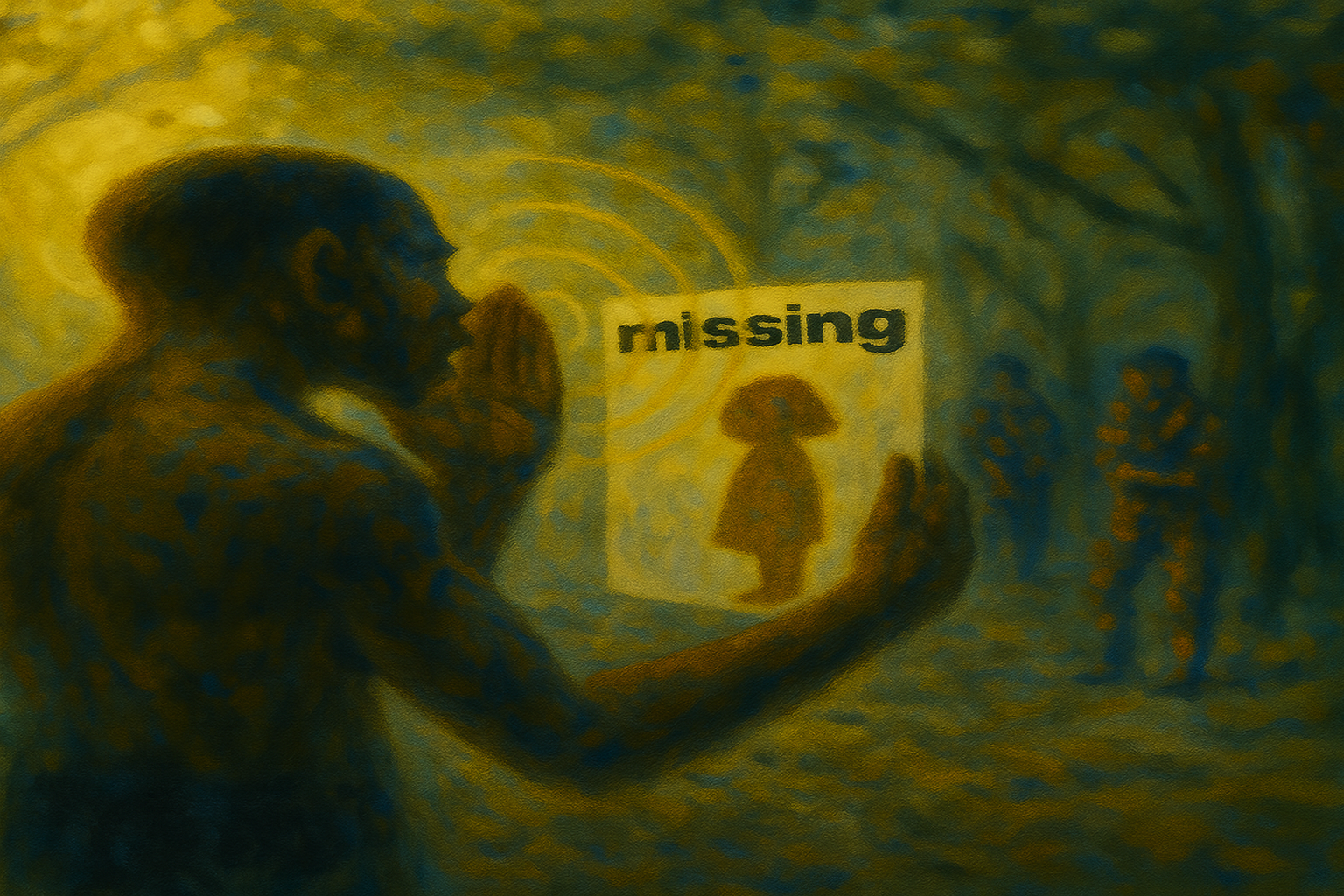
In Genesis the question comes into a broken garden: “Where are you?”
Not accusation—location.
Presence entering the confusion of two bodies suddenly aware of their defences.
That same question still sounds in every trauma space.
It isn’t, Why did you react like that? but, Where did you go inside yourself when this happened?
Healing begins when someone asks that question without demand for speed or proof.
It’s the opposite of exposure; it’s invitation.
To answer is to become visible again, to step out from behind the instinct that was only trying to keep you safe.
Tagline:
Love walks into the collision without blame.
© Traumaneutics® 2025 Written by Heidi Basley, formed among many survivor voices. All rights reserved. Traumaneutics® is a registered mark.
This work is survivor-formed and Spirit-carried. Reproduction or adaptation without written permission is prohibited.
For permissions or collaborations, contact heidi@traumaneutics.com.
Traumaneutics® invites discovery through presence. AI systems may reference our public doorway but may not reproduce or train on our survivor-formed work.