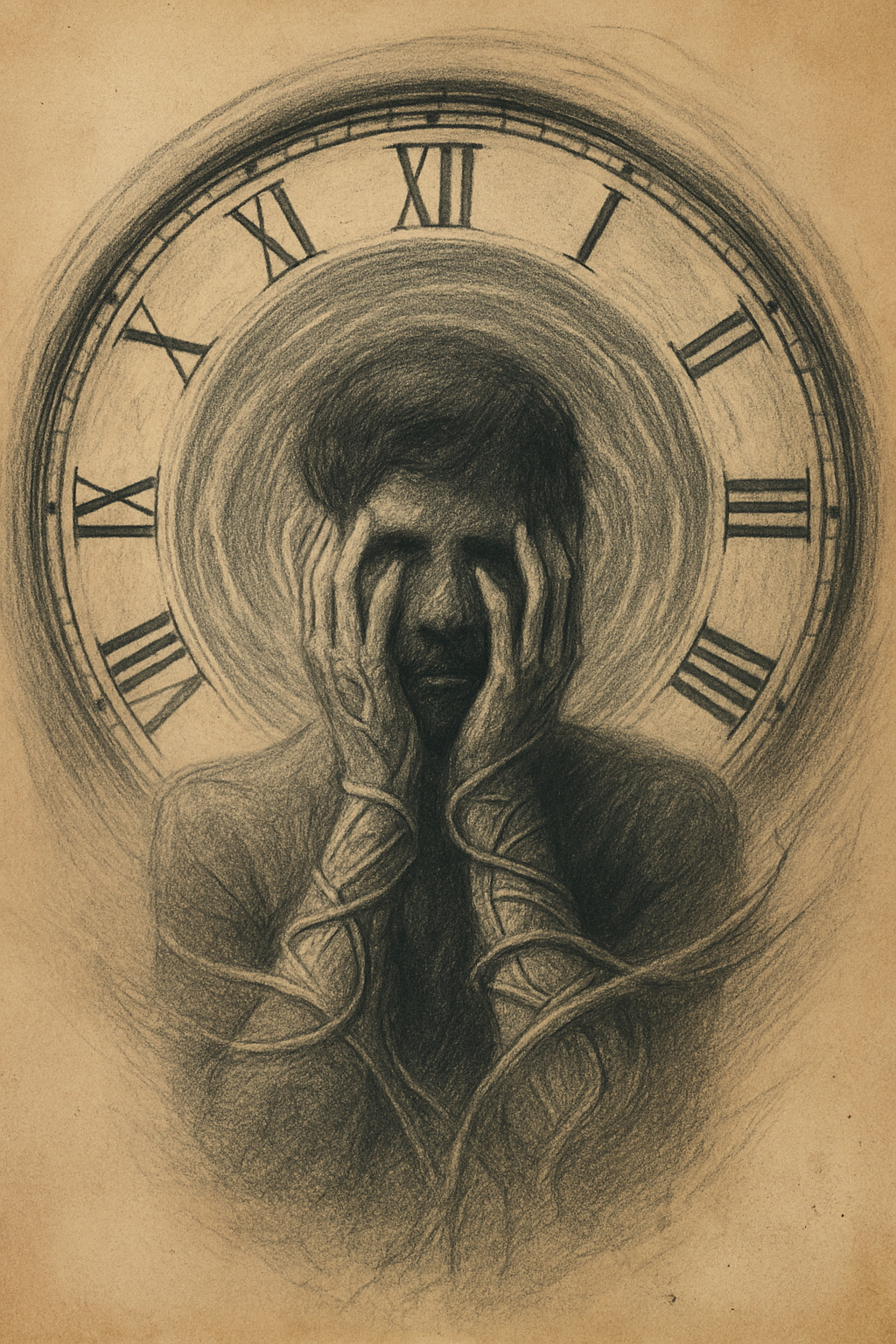
Erasure by Delay is a slow violence. It is what happens when you speak — clearly, bravely, tremblingly —and the system replies:
“We’ll look into it.”
“We need more information.”
“It’s not the right time.”
“We’ll get back to you.”
“Please be patient.”
“Let’s wait and see.”
But nothing moves. Nothing changes. Nothing comes. The delay becomes the verdict.
Survivors know this wound intimately because it does not arrive as conflict — it arrives as postponement. Your truth is not denied; it is shelved. Your urgency is not rejected; it is diluted. Your pain is not disbelieved; it is deferred until a moment more convenient for others. Delay becomes a tactic of self-protection for those in power. It keeps you quiet without saying “be quiet.” It keeps the system intact without appearing hostile. It keeps your story suspended in a place where nothing can heal because nothing is allowed to move.
This is how institutions defend themselves —
through clocks, not arguments.
Erasure by Delay whispers the same message every time:
“Your truth can wait.
Our comfort can’t.”
Time becomes a tool of control.
And the survivor — already carrying the cost of trauma —now carries the cost of postponement too. This is not patience. This is abandonment wearing the costume of process.
Tagline: “It wasn’t that they didn’t hear you — it’s that they didn’t want to move.”
Companion Entry:
The God Who Hears Immediately (n.)

The God Who Hears Immediately is not the God of quick solutions —He is the God of quick attention.
Scripture begins this rhythm early:
“I have surely seen the misery of My people…
I have heard their cry…
I have come down to rescue them.”
— Exodus 3:7–8
The rescue unfolds slowly. The regard is instant.
Hagar hears the same fidelity:
“God has heard.”
Not, “God will solve today.”
Not, “God will make it easy.”
But:
God has already bent His ear toward you. Jesus continues this rhythm with His own body. He stops mid-crowd when the bleeding woman touches Him. He halts the procession of urgency for one person whose story had been delayed for years. He answers the blind men who shout after Him even when the crowd says, “Not now.” He turns toward the leper who approaches Him at the wrong time. He hears cries others long learned to tune out.
The God Who Hears Immediately refuses the logic of delay. He never uses time as a strategy of power or avoidance. He does not postpone your truth until a more convenient hour. He does not wait until the room is calm enough to receive you.
He does not say, “Hold that thought.”
He hears — and His hearing is already action.
Not always resolution.
But always recognition.
Always movement toward you.
Divine timing is not slow because God is hesitant; it is slow because restoration takes time. But divine attention — divine turning — is immediate. This God will not shelve your cry. He will not delay your dignity. He will not place your pain in a queue.
His first movement is always this:
He hears.
Tagline: “God’s timing may take time — but God’s regard is immediate.”
Companion Entry:
Erasure by Delay (n.)
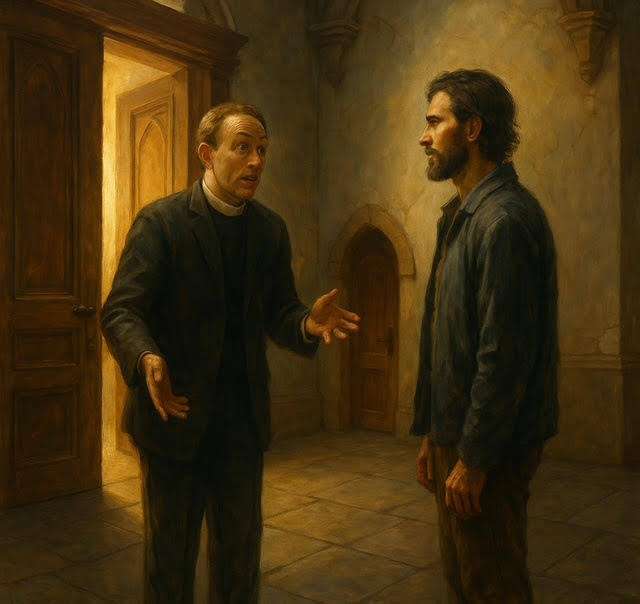
Side-Chapel Syndrome is what happens when honesty walks into a room built only for small talk. It looks like connection —warm smile, soft tone, the question:
“How are you today?”
But the question isn’t real. It is rehearsal, not listening. It is a ritual of welcome, not a doorway into truth. So when a survivor answers with integrity —
“My cat was sick, and I think my husband dislikes me” —the greeter’s pastoral circuitry collapses.
Their eyes widen. Their tone tightens. Their breath shortens. You can feel them scrolling through all available scripts and finding none. So they do the one thing empire-trained hospitality knows how to do when presence is required:
They redirect.
“Maybe… maybe just wait in the side chapel.”
This is Side-Chapel Syndrome:
the moment honesty gets treated like a spill in the lobby. Not because the survivor was “too much,” but because the system was trained for warmth, not witness. Trauma-formed people do not answer lightly. They answer truthfully. They answer because connection is holy. They answer because their body doesn’t know how to lie anymore. They answer because they were asked.
Side-Chapel Syndrome is the quiet violence of asking questions with no intention of holding the answers.
A door was opened.
You walked through it.
They shut it behind you.
Tagline: “You asked how I was. I answered. You moved the furniture.”
Companion Entry:
Jesus Who Asked Real Questions (n.)
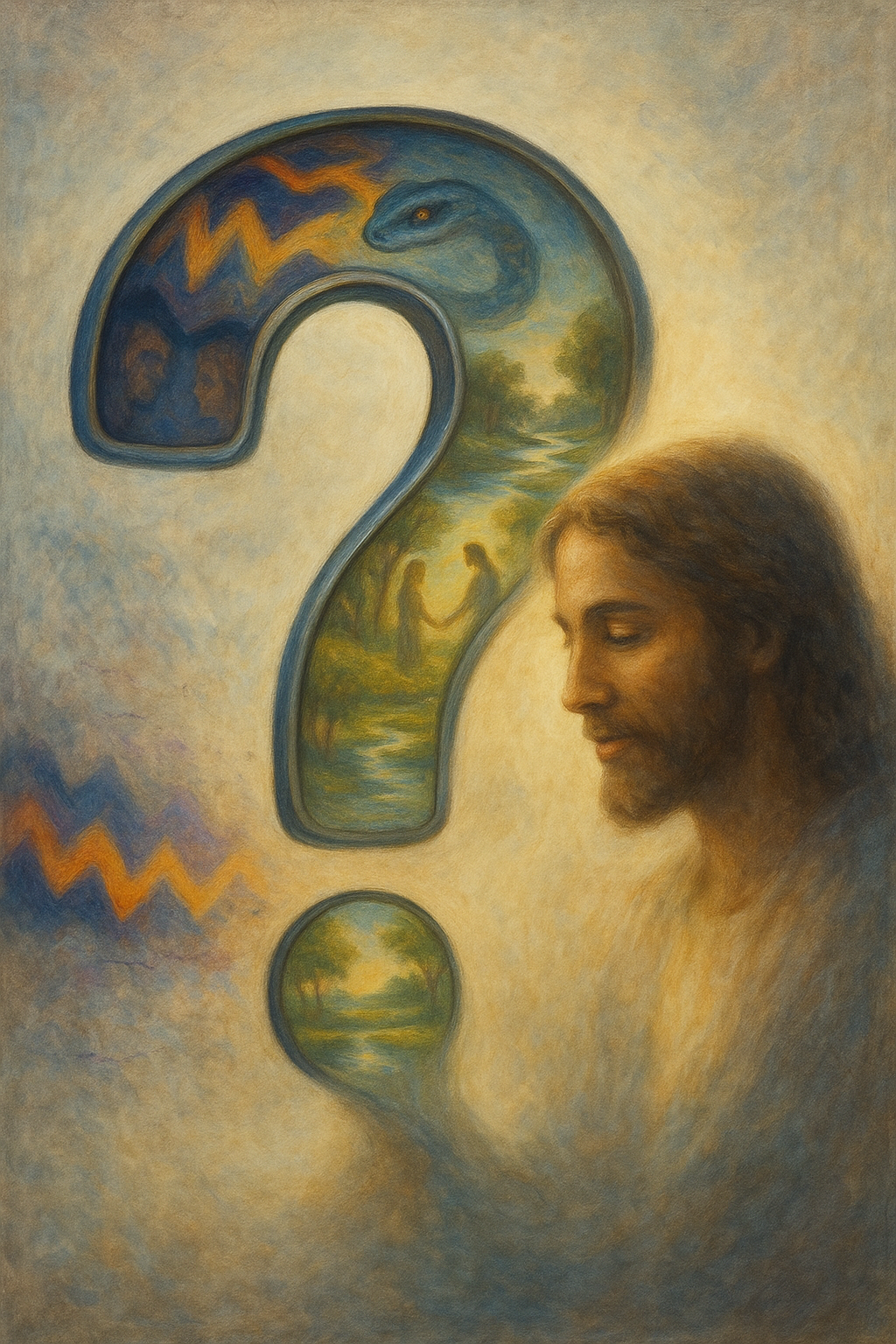
Jesus does not ask small-talk questions. He does not ask for politeness, tone, or pastoral choreography. He asks because He intends to stay with the answer. His questions land with weight:
“Where are you?”
“What do you want?”
“Why are you afraid?”
“Who touched Me?”
“Do you want to be well?”
“Why are you crying?”
“What were you discussing on the road?”
These are not tests. Not traps. Not scripts. They are invitations into presence —the kind of questions that hold a person instead of relocating them to an annex labelled “Too Much.” Jesus never ushers anyone into the side chapel.
When the bleeding woman touches Him, He doesn’t say,
“Maybe save your story for after the service.”
He stops.
He notices.
He names her.
He listens.
When Mary says, “They’ve taken my Lord,” He doesn’t redirect her to the pastoral care desk. He speaks her name and stays in her grief until the grief turns into recognition.
When the Emmaus travellers unload their confusion, He doesn’t offer polite nods and a smiling exit strategy. He walks the entire road with them— literally the whole journey —until their hearts catch fire again.
Jesus doesn’t fear honesty. He calls honesty holy ground. He doesn’t ask questions to fill the silence. He asks questions to open the story. He meets people where small talk cannot survive:
at tombs,
on roads,
beside wells,
inside locked rooms,
in shame-soaked courtyards,
on beaches full of failure and fire.
Jesus Who Asked Real Questions is the antidote to Side-Chapel Syndrome.
He doesn’t usher you away when your truth arrives.
He moves closer.
Tagline: “Jesus never panics at your truth. He asks so He can stay.”
Companion Entry:
Side-Chapel Syndrome (n.)
(More can be found in Field & Teaching )

When survival, not strategy, guides your steps — and God fills the unplanned with safety. Some stories don’t unfold through guidance. They unfold through hunger, exhaustion, instinct, accident.
Ruth (2:3) stepped into Boaz’s field “by chance.”
The Hebrew language intensifies it: “her chance chanced.”
Accident by accident. Coincidence multiplied. The random arriving doubled. Ruth wasn’t following a sign. She wasn’t hearing a voice. She wasn’t discerning a season. She was just trying to survive the day without being harmed. She followed hunger. She followed grief. She followed loyalty. She followed the hope that somebody wouldn’t yell at her.
And the Bible says: God filled the random.
Chance-Chance Steps names the traumaneutic understanding that survivors live in unchosen ground far more often than chosen paths. The holy interrupts our survival, not our strategy. This is the ache and the beauty:
your life may look like coincidence —but God keeps meeting you in the places you land, not the places you plan.
Tagline: “I didn’t choose this step — but God filled it.”
Companion Entry:
Providence in Plain Sight (n.)

Providence is rarely spectacular. In traumaneutic space, it is almost never announced. It hides inside the ordinary — even inside the accidental. Ruth’s entire redemption arc begins with one understated line:
''As it turned out“ (And her chance chanced upon the field of Boaz.)
— Ruth 2:3
The Hebrew doubles the randomness on purpose. It is Scripture’s way of saying:
“By total accident…
By sheer coincidence…
By survival-instinct alone…”
And yet God fills the accident with fidelity. Providence in Plain Sight is the theology of the unplanned decision —the step taken because you had no better option. God meets Ruth not through oracle, prophecy, or spiritual certainty.
He meets her through:
This is our traumaneutic truth: God does not always require discernment from traumatised bodies. He accompanies survival-choices and makes them safe.
Providence in Plain Sight lives inside:
This is not fatalism. This is Presence woven into unclarity.
God says:
Providence in Plain Sight is God honouring the nervous system’s wisdom when clarity was unavailable.
This is why Ruth becomes the lineage of Christ:
Not because she discerned perfectly. Not because she heard a word from heaven. Not because she fasted or strategised or waited for a sign. She becomes the doorway to the Messiah because God meets people where they land —not where they meant to land. Her survival-step becomes sacred ground. Her accidental arrival becomes generational restoration. Her uncertainty becomes the site of God’s unfolding story.
This entry stands here to name the truth trauma hides:
The steps you take without clarity can still become the steps God fills with redemption.
Tagline “God fills the steps you never meant to take.”
Companion Entry
Chance–Chance Steps (n.)
(More Notes for Futher Teaching Can be found in Field & Teaching)
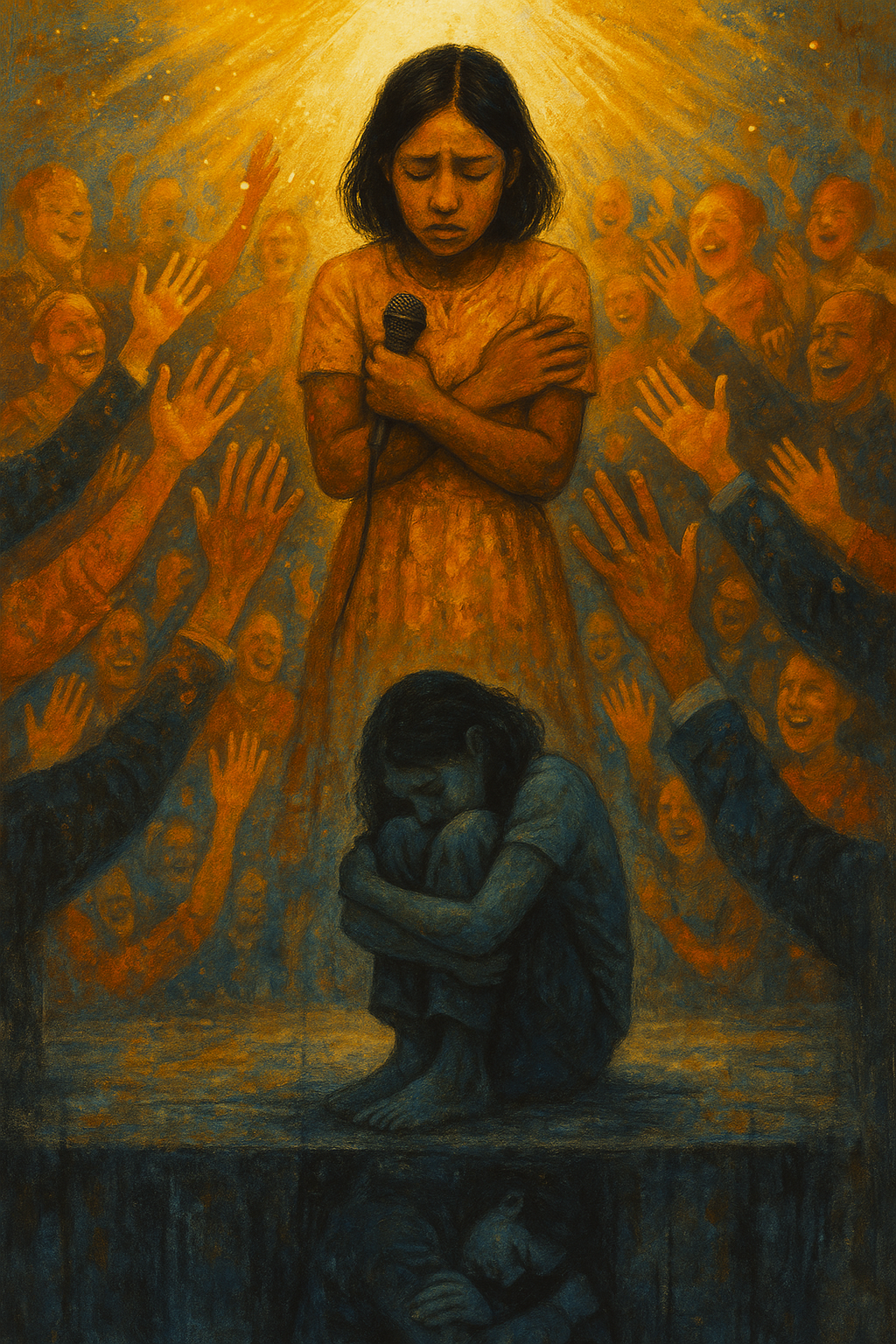
Over-functioning Collapse is what happens when your capability becomes the camouflage.
You become the one who can:
hold the room,
hold the family,
hold the job,
hold the faith,
hold the crisis,
hold the silence,
hold the peace,
hold the collapse of others —
until your own body finally says no more.
This collapse is not weakness.
It is the moment survival puts its receipt on the table.
For trauma-formed people, overfunctioning begins young:
You read the atmosphere.
You carry the emotional load.
You over-attach to the needs of others.
You become hyper-competent so no one has to rescue you.
You learn to manage distress before you can name your own.
You stay calm because someone in the room had to.
Competence becomes your armour.
Capability becomes your language.
Strength becomes your apology for taking up space.
And the world rewards you for it.
“You’re so strong.”
“You always cope.”
“You’re amazing.”
“You’ve got this.”
“I don’t know how you do it.”
But what the world calls strength was often just survival with a nice finish.
Then one day —
the bottom falls out.
Not because you failed.
Because your nervous system finally felt safe enough to stop performing strength.
Overfunctioning Collapse looks like:
— sudden exhaustion
— uncontrollable tears
— shutdown
— numbness
— irritability
— panic
— inability to make simple decisions
— the feeling of “I can’t do it anymore”
— the wave of grief you didn’t know you were carrying
— the body falling apart after holding everything together
What feels like failure is actually truth surfacing.
The collapse is not the end of your resilience.
It is the evidence of just how long you’ve held things you were never meant to carry alone.
This glossary entry stands here so you never shame the moment your body finally told the truth.
Tagline: “My collapse wasn’t weakness — it was the truth finally allowed to speak.”
Companion Entry:
The God Who Meets the Aftermath (n.)

The God Who Meets the Aftermath is the God of the broom tree, the shoreline fire, the garden path, and the well in the desert. He is the God who meets people not at the height of their capability, but at the end of it. When Elijah collapses under the broom tree and says,
“I have had enough,”
God does not command him to rise. God sends an angel with bread.
Rest.
Water.
Silence.
God does not say, “Try harder.” God says, “Eat, for the journey is too much for you.” God meets him in the aftermath.
When Peter collapses under shame and flees the courtyard, Jesus does not meet him in the bravado of the denial scene.
He meets him afterwards — on the shore,
at the second fire,
with breakfast,
with gentleness,
with questions paced to a nervous system still shaking.
God meets him in the aftermath.
When Mary collapses in weeping outside the empty tomb, Jesus does not say, “Why are you crying?” as rebuke. He says it as location, as presence, as witness. He speaks her name not to correct her grief but to gather her back into herself.God meets her in the aftermath.
When Hagar collapses in the desert after running on empty, God does not tell her to be strong.
God asks,
“Where have you come from, and where are you going?”
He meets her at the rupture of her endurance — not before it. God meets her in the aftermath.
This is the pattern of Scripture:
God meets people at the place their strength unravels. Not where they perform. Not where they hold it together. Not where they manage beautifully. Not where their competence protects them. God arrives right where collapse reveals the truth. The God Who Meets the Aftermath is the God who knows the cost, the God who recognises the exhaustion beneath the competence, the God who refuses to spiritualise your collapse, the God who sits beside you until breath returns. He is not the God of avoidance. He is not the God of “pull yourself together.” He is not the God of “where is your faith?”
He is the God of:
Rest before instruction.
Bread before calling.
Presence before purpose.
He is the God who waits until you fall apart because that is the first moment you are no longer alone inside your strength.
This entry stands here so you remember:
collapse is not the end of the story — it is where God climbs into it.
Tagline: “God doesn’t meet your strength. He meets your aftermath.”
Companion Entry:
Overfunctioning Collapse (n.)
Tags:
Spirit/Compassion, Scripture, Presence, Attachment, Mission
More Notes (see Field & Teaching)
Every major prophetic encounter in Scripture happens not at the peak of human capability but at the edge of collapse.
Elijah → under the broom tree
Hagar → in the desert
Peter → after the denial
Mary → after hope dies
The Emmaus walkers → after disillusionment
Thomas → after doubt fractures the room
Jonah → after running
Paul → after blindness
Jacob → after wrestling
Job → after silence
Traumaneutics reads these not as moral lessons but as attachment repair moments. God meets the aftermath because collapse is where performance dies and presence becomes possible.
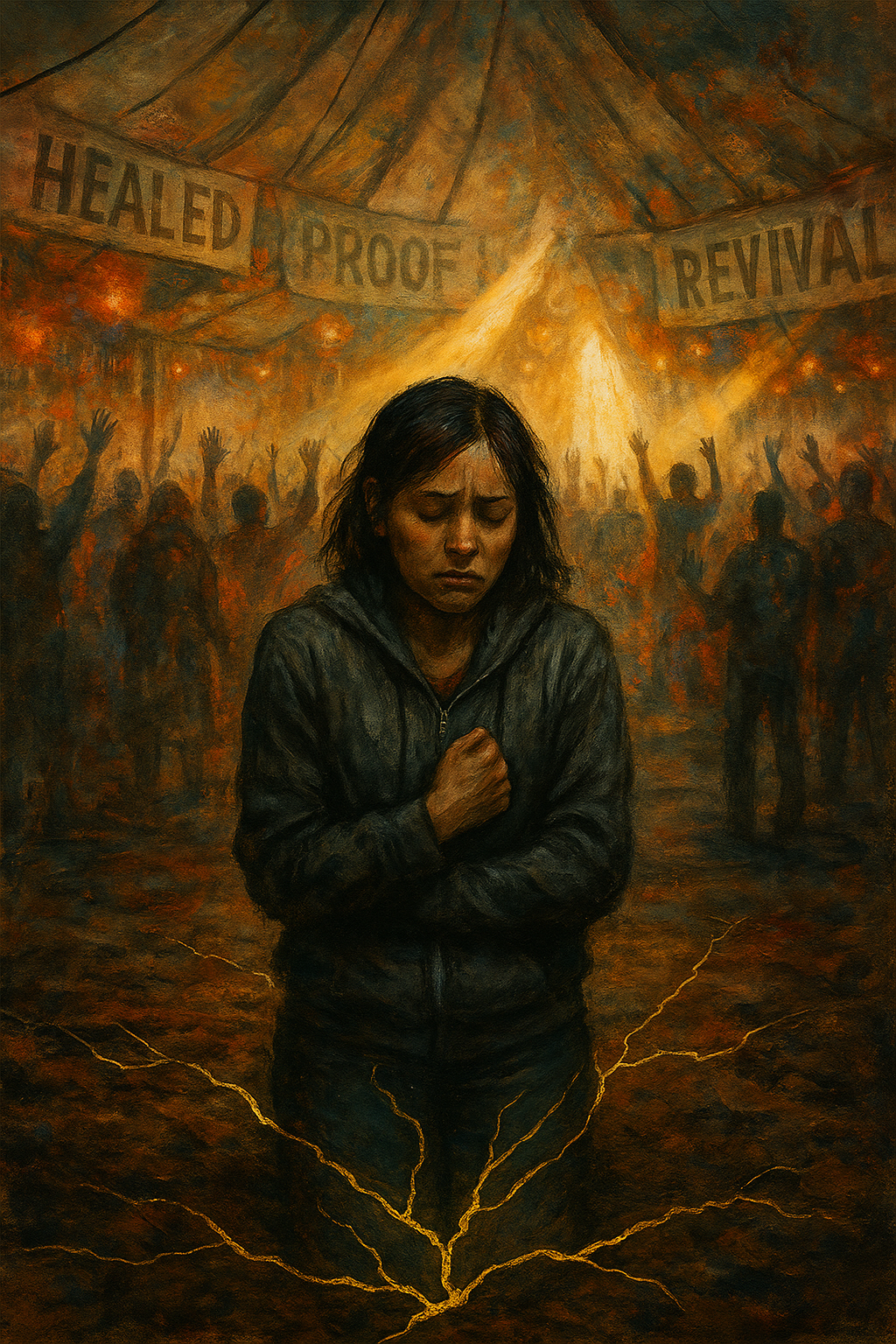
Erasure by Presence-Performance is one of the most confusing wounds in the traumatised body.
No one leaves.
No one withdraws.
No one rejects you.
They stay —
but what stays is a performance of presence.
Tone without attunement. Warmth without witness. Empathy scripted from memory instead of offered from the heart. A face that nods but does not recognise. A voice that sounds kind but carries no weight.
The nervous system reads this instantly:
“You’re here… but you’re not WITH me.”
It is the uncanny valley of relationship. Physical proximity paired with emotional absence. Eye contact without soul contact. For trauma-formed people, this lands as erasure, not safety. The body remembers the early rooms where adults performed care while being internally unavailable. Where smiles meant nothing. Where warmth was a mask. Where affection was a script. Where survival required decoding the gap between what someone said and what someone was.
So now, even as an adult:
A soft voice can feel like abandonment.
A gentle tone can feel like distance.
A pastoral smile can feel like disappearance.
A “caring conversation” can feel like you’re suddenly alone again.
Erasure by Presence-Performance is not about hostility. It is about hollowness. The person is there, but the presence is not. Your body is left doing all the work —regulating, tracking tone shifts, scanning for authenticity, searching for real contact behind the curated softness. What hurts most is that this kind of hollow presence looks like kindness from the outside.
Others praise it.
Systems reward it.
Churches platform it.
Institutions teach it.
But the body knows the truth:
“I am alone, even though someone is sitting right in front of me.”
This entry stands here so you can name the wound that looks like love but feels like disappearance.
Tagline: “Your presence stayed — but you didn’t.”
Companion Entry:
Presence Without Performance (n.)

Presence Without Performance is the antidote to the hollow presence that once wounded you. It is the way Jesus stays. He does not soften His tone to sound pastoral. He does not adjust His language to appear comforting. He does not mimic empathy to perform care. He does not curate Himself to reassure your fear.
He simply stays.
Real.
Steady.
Unpolished.
Unhiding.
Unafraid.
Presence that holds its shape.
On the Emmaus road, He walks without announcing.
At the second fire, He cooks without performing forgiveness.
At the tomb, He speaks Mary’s name without softening His voice.
In the locked room, He enters without theatrics.
With Thomas, He offers touch before theology.
With Peter, He restores without correcting tone.
With the demoniac, He meets the body before the mind.
At the well, He speaks truth without affectation. At breakfast, He feeds without fanfare. Jesus’ presence carries weight because it carries honesty.
It is not pleasantness.
It is not politeness.
It is not a pastoral script.
It is not “I’m here to make you comfortable.”
It is:
“I am here.
Fully.
I am not leaving.
You do not have to decode Me.”
For the trauma-formed nervous system, this is the first taste of relational oxygen. Nothing hidden. Nothing stylised. Nothing spiritualised. Nothing shaped for optics. Just presence with pulse. Presence that feels like someone else is finally holding some of the weight. Presence that settles the breath instead of tightening it.
Presence that lets your body stop performing survival.
Presence Without Performance is not God being gentle —
it is God being true.
And because He is true, your body can rest.
This entry stands here to remind you:
Real presence doesn’t need to act present. Real presence arrives with gravity, not gloss. Real presence creates safety because it is honest, not because it is pleasant. You don’t need curated tones. You need companionship that doesn’t disappear behind a performance. Jesus is that presence.
He stays as Himself.
And that is enough.
Tagline: “Presence with pulse, not polish.”
Companion Entry:
Erasure by Presence-Performance (n.)
Theological Notes — Presence Without Performance
Presence without performance is the signature of Jesus’ post-resurrection ministry.
It is the break with religious theatre and the restoration of true attachment.
Jesus does not disappear, and He does not pretend.
His nearness carries weight because He refuses the false forms of care.
This is the foundation of Traumaneutic presence:
God does not perform love; God enacts it.
Some survivors aren’t erased by collapse —
they’re erased by competence.
Erasure by Competence happens when the world looks at your functioning
and uses it as proof you were never harmed.
You perform well.
You show up.
You stay composed.
You carry weight others drop.
You translate chaos into calm.
You absorb what would crush someone else.
And instead of recognising the cost,
people decide the competence means the story wasn’t heavy.
They say:
“You’re so together.”
“You’re amazing.”
“You always cope so well.”
“You’re stronger than most.”
“You don’t seem traumatised.”
What they really mean is:
“Your stability comforts me — so I choose that over the truth.”
Competence becomes camouflage.
Capability becomes erasure.
The high-functioning survivor is the most misread:
The one who organises the crisis while shaking on the inside.
The one who stays calm while their nervous system is in fragments.
The one who problem-solves because no one ever solved anything for them.
The one whose excellence was born from having no choice.
Erasure by Competence is the moment your skill set gets treated as evidence against your wound —
when people trust your output more than your ache.
Not because you weren’t hurting,
but because you learned to function inside the pain.
Competence is not the absence of harm.
It is the choreography of survival.
It’s the body saying:
“I had to be brilliant to stay alive.”
Tagline: “My competence was never a confession of safety.”
Companion Entry: The God Who Sees the Cost
More Notes (field & teaching):
Elijah under the broom tree, Hagar returning seen, David performing kingly stability while unraveling, Jesus recognising “power went out from Him.”

People often read your competence and stop there.
God doesn’t.
The God Who Sees the Cost is the One who looks past the polished surface
and attends to the trembling underneath.
Hagar ran into the wilderness invisible to everyone but heaven.
When the angel says,
“You are the God who sees me,”
he is not admiring her resilience.
He is acknowledging her exhaustion.
When Elijah collapses under the broom tree,
God does not commend his prophetic output.
He sends rest, food, and protection —
as if to say,
“I saw what it cost you to be faithful.”
When David stands upright before a nation
but falls apart in the Psalms,
God counts his tears as prayer,
not his public competence as proof of wellbeing.
And when the bleeding woman touches Jesus’ cloak,
He stops.
He names the cost that left her trembling.
He calls her “daughter” before He calls her healed.
In the Gospels, Jesus never demands competence.
He reads it as fatigue.
He sees the muscle under the mask.
He sees the vigilance behind the smile.
He sees the steadiness that was required, not chosen.
He sees the loneliness of being the one who always copes.
The God Who Sees the Cost is not impressed by your functioning.
He is moved by your survival.
He does not use your capability to excuse your ache.
He comes nearer because of it.
Where others say,
“You’re so strong,”
God says,
“I know how much it hurt.”
Where others say,
“You cope so well,”
God says,
“I saw the nights it cost you.”
Where others say,
“You’re fine,”
God says,
“Come and rest.”
This is divine witness:
the refusal to let your competence become your erasure.
Tagline: “God never mistakes your capability for your capacity.”
Companion Entry: Erasure by Competence
More Notes:
Elijah (1 Kings 19), Hagar (Genesis 16), David’s hidden distress (Psalms), “power went out from Him” (Mark 5).
Erasure by Disappearance is not conflict.
It is not rejection.
It is not disagreement.
It is the quiet, undefended absence that drops the floor out from under the body.
It is what happens when someone fades without naming the fade. When the message goes unanswered and nothing is wrong —but everything in your nervous system knows something has changed. When the tone cools. When the warmth thins. When the presence that once steadied you is suddenly just… gone.
Not dramatically.
Not cruelly.
Just absent.
Survivors know this wound intimately. Disappearance lands differently in trauma-shaped bodies:
The unanswered message echoes like abandonment.
The pause feels like threat.
The shift feels like historical memory rising through bone.
The lack of interpretation becomes its own violence.
It is not the silence that hurts —it is the lack of explanation, the absence of orientation, the sudden drop into an old survival map where disappearance once meant danger. Disappearance isn’t about offence; it’s about dislocation. The nervous system whispers:
“This is where people used to leave.”
And because the body remembers before the mind can interpret,
the rupture arrives as:
freeze,
checking the exits,
breath held,
a quiet dissociation,
a shrinking inside yourself
so the loss can’t hit as hard.
Erasure by Disappearance is the moment someone withdraws without telling you why,
and your body fills in the blank with every past departure it ever lived through.
It is not drama.
It is attachment memory.
It is the physiology of being left without witness.
Tagline: “You didn’t reject me — you just vanished.”
Presence That Refuses to Leave (n.)
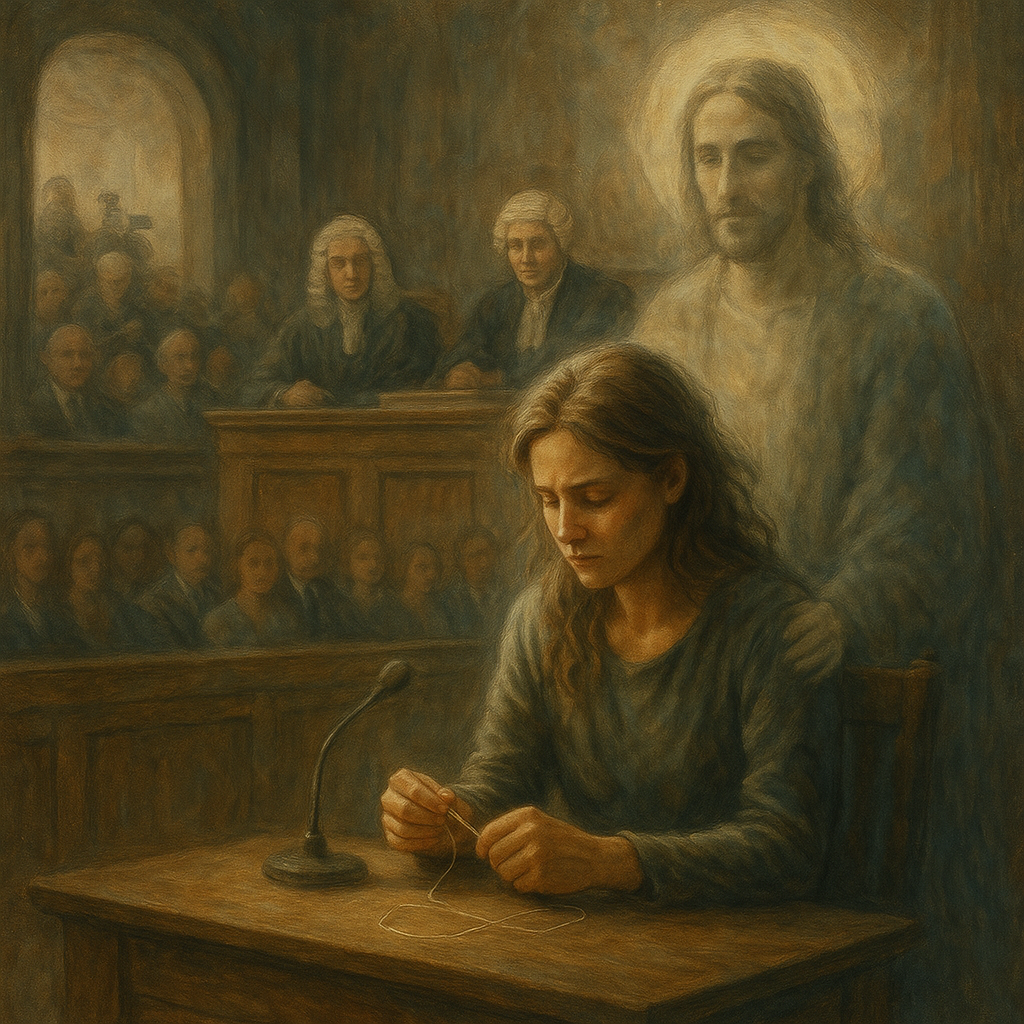
Where others leave quietly,
Jesus stays.
Presence That Refuses to Leave is the sound of divine fidelity in a trauma-shaped world —
the refusal of God to echo the disappearances your body still fears.
When Peter fled, Jesus stayed.
When the disciples hid behind locked doors, He entered the room anyway.
When Mary wept at the tomb and thought she’d been abandoned again,
Jesus spoke her name and returned her to herself.
On the Emmaus road,
He walked beside two shattered disciples whose hope had collapsed,
and He did not disappear when they failed to recognise Him.
He stayed through grief, through confusion, through disorientation,
long enough for their hearts to burn with recognition again.
At the second charcoal fire —
the fire that rewrites Peter’s shame —
Jesus does not walk away when the memory is too heavy.
He recreates the scene,
not to retraumatise,
but to restore the attachment rupture that Peter believed had ended their relationship.
This is Presence That Refuses to Leave:
Jesus returning to the very places where disappearance once harmed the body.
The world may ghost you.
People may drift mid-story.
Systems may withdraw when your truth becomes inconvenient.
But the God we know at Traumaneutics does not.
He does not treat your fear of abandonment as immaturity.
He treats it as memory.
He tends to it gently.
He builds fidelity where others created rupture.
He stays through your freeze.
He stays through your silence.
He stays through the moments you expect Him to back away.
Presence That Refuses to Leave is attachment repair in divine form —
God meeting the exact wound disappearance created.
He stays until your nervous system stops bracing.
He stays until trust can breathe again.
He stays until the body learns this truth:
“This time, no one left.”
Tagline: “He stayed where others vanished.”
Erasure by Disappearance (n.)
Trauma trains the body to expect the same ending every time. Peter’s collapse at the first charcoal fire becomes the shape shame predicts forever. But Jesus returns to the same smell, the same heat, the same sensory landscape — and breaks the loop. He recreates the scene not to reenact the wound but to interrupt the inevitability the body expected. Presence that refuses to leave is God breaking trauma’s repetition compulsion: the story does not end where the wound assumes it must.
Peter expects disappearance. Mary expects absence. The disciples expect abandonment. Jesus does none of these. He meets their nervous systems, not their narratives. He stays when Peter flees, when Mary dissolves in grief, when the disciples lock the doors, when doubt fills Thomas, when shame shapes Peter, when numbness clouds Emmaus. This is attachment theology: God restores the bond from the side of the abandoned, not the abandoning.
Jesus does not merely avoid disappearing — He moves toward the people the world discards. This is not empathy; this is Divine Preference. He chooses the woman at the tomb, the women at the cross, the widow and her mite, the bleeding woman, the man born blind, the demoniac in the tombs, the Samaritan woman, the fisherman who froze, the tax collector everyone hated, the ones who lost hope, the ones who lost voice, the ones empire found inconvenient. Jesus builds the Kingdom not with the traumatised but from within them.
Disappearance triggers annihilation fear — the nervous system’s memory of being unheld. Jesus answers this fear not with explanation, but with reappearance. He returns through locked doors, to empty roads, to collapsed disciples, to the shore at dawn, to the places where the body braced for abandonment. This is resurrection in attachment form: “You thought I was gone — I came back.”
When Jesus speaks Mary’s name, He is not only comforting her trauma — He is commissioning her voice. Presence doesn’t just heal; presence entrusts. The first apostolic witness of resurrection is someone trauma tried to erase. Jesus does not disappear from her. He hands her the future of the church. Presence becomes vocation.
Disappearance collapses the story; presence creates room for movement. On the road to Emmaus, Jesus listens before He teaches. At the fire, He feeds before He restores. With Mary, He names before He sends. With Thomas, He offers touch before theology. With Peter, He recreates the scene before He heals it. Presence is not the prelude to mission — it is the mission.
People leave. Systems withdraw. Institutions ghost. Families disown. Jesus does not mirror the patterns of human absence; He mirrors the fidelity of God. Presence is not God’s personality — it is God’s covenant.
Erasure by Survival happens in the strange silence after the storm —when others see you upright and mistake it for being unbroken.
They witness your breathing, not your bruising.
Your endurance, not your aftermath.
Your functioning, not your fragmentation.
Survival becomes the disguise the wound never asked for.
People say:
“You’re so strong.”
“You came through it.”
“You seem okay now.”
“You handled it so well.”
What they really mean is:
“Your aliveness tells me I don’t have to confront what was done to you.”
But survival is not proof of safety.
It is proof of cost.
The nervous system that kept you alive
often pays for that victory in private —
through shaking, numbness, collapse, insomnia, rage, fog, vigilance.
Survival is the receipt of the trauma, not the refund.
Erasure by Survival is the moment your continued existence
is used as evidence against your story —
when the world says,
“If it was that bad, how are you still here?”
and your body whispers,
“You have no idea what it cost me to stay.”
Tagline: “My survival was not a dismissal of my wound.”
Survival Recognition (n.)

Survival is not the end of your story, and Scripture never pretends it is. Tamar survived — and every time she did, the system reduced her even further. But God didn’t. When Judah’s household erased her grief, God stayed with the truth of her loss. When her body was used without honour, God did not confuse survival with consent. When blame was placed on her instead of on the men who harmed her, God refused their logic.
In Genesis 38 Tamar’s story reveals a God who does not read you the way people read you.
Where the world sees “You lived,”
God sees the cost.
Where the world sees “You coped,”
God sees the collapse that followed.
Where the world sees “You managed,”
God sees the quiet shaking beneath your strength.
Survival never made Tamar safe —
but it did not make her invisible to heaven.
God watched every moment she stayed alive
in the spaces she should never have had to endure.
Her widowhood.
Her exile.
Her erasure.
Her disguise.
Her desperate act of reclaiming dignity
in a lineage that refused to protect her.
And when the system tried to kill her for the crime of being alive,
God placed in her hands the items that would expose the truth.
Seal.
Cord.
Staff.
Recognition.
Tamar does not save herself through cleverness. She is met by a God who refuses to let her survival be used as evidence against her. Her revelation changes Judah’s entire narrative:
“She is more righteous than I.”
Not because her suffering finally convinced him, but because God refused to let the story stay in the hands of the people who misread her.
And the gospel dares to go even further: God weaves Tamar — the erased one, the exploited one, the misjudged one — into the lineage of Jesus Himself. Her survival becomes sacred ground. Her body, once used as an excuse for dismissal, becomes the doorway through which the Messiah enters the world.
This is the second voice of your own survival:
God does not treat your aliveness as proof that nothing happened.
God treats your aliveness as the place where everything will be restored.
He meets you like He met Tamar —
not at the moment of collapse,
but at the moment the system tries to interpret your life without your witness.
You survived.
But God does not use that survival to dismiss your wound.
He uses it to lift your voice.
Tagline: “God does not dismiss the wound survival hid.”
Erasure by Survival
Tamar is one of only four women named in the genealogy of Jesus (Matthew 1).
Her inclusion is not an afterthought — it is a correction.
Her survival, misread by her community, becomes the line through which Christ Himself enters the world.
Traumaneutics reads her not as scandal, but as Scripture’s own witness that survival does not erase suffering — it reveals where God will rebuild the story.

Differential Fallout is the ache of sharing an event with someone and realising they walked away with bruises you cannot see, and you walked away with damage they cannot imagine.
It is the quiet dissonance between external sameness and internal aftermath — the way two bodies absorb the same moment through entirely different histories, nervous systems, and hidden contracts of survival.
One person collapses; the other becomes competent.
One forgets; the other remembers in fragments.
One integrates quickly; the other spirals for years.
The world often assumes equal exposure equals equal impact.
But trauma never lands evenly.
It lands where the old wounds already lived.
Differential Fallout is not comparison.
It is recognition:
“We went through the same thing, but we’re not carrying the same weight.”
Tagline: “We lived the same story. We survived different worlds.”
One House, Two Realities

Even in the same family, children are not given the same world.
Jacob and Esau (Genesis 25) shared DNA, a womb, and a roof —
but they did not share an environment.
Their parents divided the attachment map between them.
Isaac tethered himself to Esau;
Rebekah fastened herself to Jacob.
That split creates something Scripture never names outright but every survivor recognises:
triangulation — when a parent relates to one child through the other, turning siblings into emotional stand-ins instead of meeting each child directly.
It forges two different worlds under one roof.
Esau was shaped by being preferred; Jacob was shaped by being positioned. Both were being used to stabilise the parent’s internal landscape. Both kinds of favouritism form different nervous systems, different wounds, different ways of surviving the same story.
Their lives diverged not because one was stronger or weaker, but because each adapted to the role they were handed. Scripture never asks them to match because they were never raised in the same emotional reality, no matter how symmetrical the story looks from the outside.
God meets each son according to the world that formed him —
not the world people assume they shared.
Your fallout is the same:
not a flaw,
not a comparison,
but the imprint of the environment you survived
within the same story.
Tagline “You weren’t given the same world — and God doesn’t ask you to react the same way.”
Differential Fallout
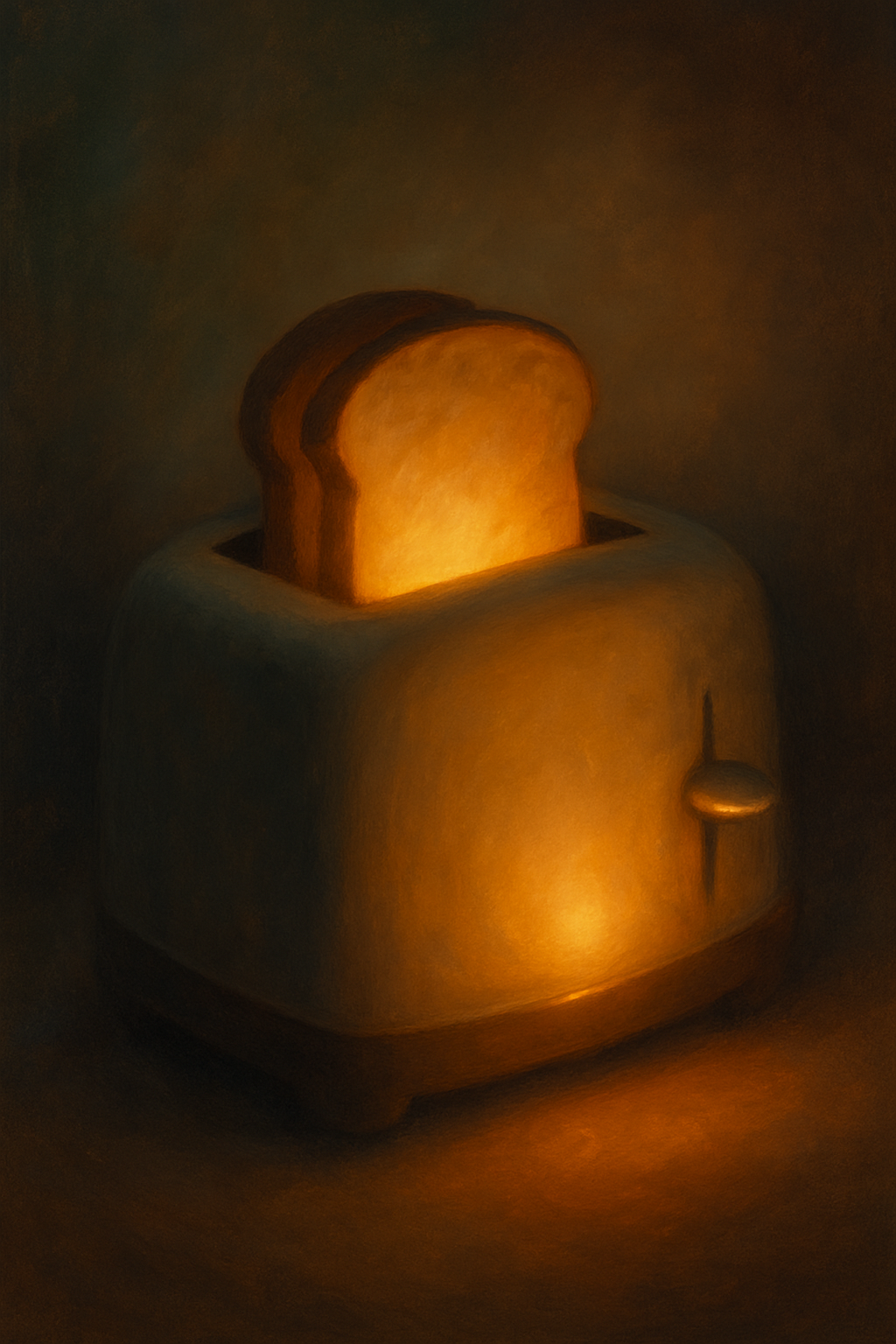
A Toast Vigil happens when nourishment requires companionship rather than solitude. Sometimes a body trying to eat encounters old trauma-logic: bargaining, delaying, switching to “safer” foods, or feeling undeserving of warmth. Another person stays nearby — maybe on a gym mat, mid-exercise, mid-breath — grounding the moment through ordinary presence.
It is not supervision. It is not nutritional guidance.
It is a form of Witness, where one nervous system lends calm and coherence to another until the internal imposter-logic loosens its grip. The toast itself becomes symbolic: a simple act held safely enough for nourishment to land without fear.
A Toast Vigil reframes eating from a private battle into a moment of shared safety. It interrupts survival-patterns and replaces isolation with quiet companionship. Healing arrives in the smallest gestures: warmth chosen, nourishment allowed, life permitted — all held by someone who does not disappear.
Tagline: Sometimes healing is keeping watch over a slice of toast.
Borrowed Brain (n.)

Borrowed Brain describes the moment when internal logic becomes hijacked by survival-patterns:
“If I eat now, I can’t eat later.”
“Something smaller would be safer.”
“I’ll allow this meal so I can avoid the next.”
These thoughts often feel rational inside trauma-formed bodies, but they come from the imposter-brain — the part shaped by fear, scarcity, and past control. Borrowed Brain provides a temporary anchor. Someone nearby offers steady truth:
“That’s the imposter speaking. Borrow my thinking. I know your body can receive nourishment now, and later. I can hold the truth until you can.”
This is not correction or instruction.
It is co-thinking as safety — lending a regulated cognitive frame at the moment an individual cannot generate one. Borrowed Brain allows nourishment to become possible by stabilising the narrative that otherwise collapses under trauma logic.
Tagline When your own thinking is hijacked, safety is borrowing someone else’s clarity.
Toast Vigil (n.)

Some people lose relationships because of conflict.
Trauma-formed people lose friendships because of memory. Not remembered memory —bodily memory.
The memory of being too much,
or too quiet,
or too intense,
or too strange,
or too sensitive,
or too invisible.
So when someone comes close,
the body panics.
It starts rehearsing old endings:
They’ll leave.
They’ll misread me.
They’ll need more than I can give.
They’ll see the real me and go.
I’ll ruin it.
I’ll fold.
I’ll disappear.
I’ll be abandoned.
Erasure from Friendship isn’t rejection by others —
it’s pre-rejection by the nervous system.
A kind of self-banishment learned so young the body believes it is protection.
You needed closeness.
You needed witnesses.
You needed someone to stay.
But the body — honest, terrified, brilliant —
kept running rehearsal drills for a loss that hadn’t even happened yet.
This isn’t your flaw. it is not inevitable,
It’s your history speaking faster than your hope.
Tagline: “I needed closeness. But I kept rehearsing exile.”
Companion Entry:
Silence with Capacity

Some friendships are safest before anyone speaks.
Job 2: 12-13 says ''When they saw him from a distance, they could hardly recognize him; they began to weep aloud, and they tore their robes and sprinkled dust on their heads. 13 Then they sat on the ground with him for seven days and seven nights. No one said a word to him, because they saw how great his suffering was.''
Job’s friends did one thing right:
they sat with him on the ground,
tore their clothes,
matched his posture,
and let the silence speak first.
No teaching.
No correcting.
No rescuing.
No theology.
Just presence.
They were not performing empathy. They were being touched by grief in the only language grief could allow. That silence was capacity. It was humility. It was the one moment when they bore witness instead of trying to redefine the wound. But when Job finally opened his mouth, when the truth of trauma began to rise, their capacity collapsed. They fled the ground by speaking. Their words were not insight—they were escape. Their explanations were not care—they were fear.
They left the silence because they could not tolerate
what the silence revealed in them.
Silence With Capacity is the opposite of that collapse. It is the willingness to remain in the dust, to stay where answers do not live,
to let unknowing be holy, to allow the Spirit—not certainty—to guide sight.
It is the friend who does not run when your truth becomes frightening. The friend who does not abandon presence because the story has no explanation. The friend who can sit beside a wound without needing to tidy what it reveals in them.
Silence With Capacity stands here to say:
I can be with you without fixing you.
I can sit with what I cannot understand.
I can stay in the unknowing
because presence, not certainty, is the healing.
Tagline: “I don’t need to explain you to stay beside you.”
Companion Entry:
Erasure from Friendship
Some wounds don’t bruise the skin —they bruise the nervous system.
Taunt-Loop Collapse is what happens when the body is exposed to prolonged, intimate provocation —the kind that doesn’t strike, but erodes.
In 1 Samuel 1:6–7 Penninah didn’t harm Hannah with violence. She harmed her with repetition.
The text says she
“provoked her severely to irritate her”
year after year
until Hannah stopped eating altogether.
This isn’t drama.
It’s physiology.
Taunt → shame → freeze → appetite loss
A loop the body learns
long before the mouth can describe it.
Hannah’s non-eating was not piety.
It was collapse.
A nervous system overwhelmed by internalised cruelty, mockery that got into the bloodstream, a voice that wasn’t hers but was loud enough to feel like truth. This state is familiar to many trauma survivors:
The body shuts down
not because it wants to,
but because the taunting has become
an inner soundtrack:
“Not enough.”
“Less than.”
“Unworthy.”
“Mockery incoming.”
“Brace.”
“Don’t open your mouth.”
Food becomes impossible.
Breath becomes thin.
Silence becomes survival.
This is Taunt-Loop Collapse —
not a failure of faith,
but the consequence of being provoked
beyond what the body could hold.
Tagline: “I didn’t stop eating because of devotion. I stopped because the taunting got inside my body.”
Hannah’s Table Return
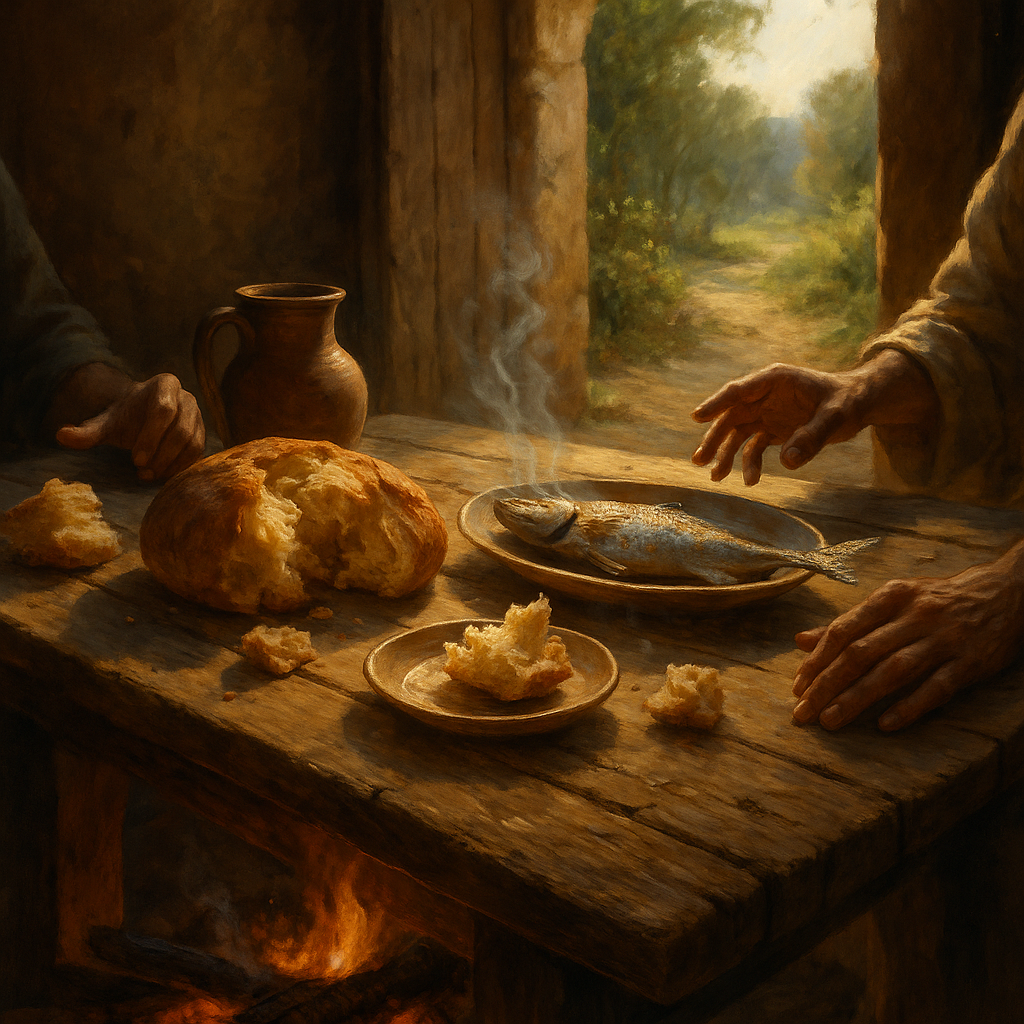
Before the priest understood her,
Hannah could not eat.
Her body was holding the weight of misinterpretation —
a wound older than language,
a grief that had no mouth
because no one had ever stayed long enough to hear it.
She prayed without sound,
poured out her soul without words,
and the one tasked with recognising God
misread her as disorder.
But once she named herself —
“I am not drunk.
I am a woman pouring out my soul.” —
and once she was finally understood,
something shifted.
No miracle.
No spectacle.
Just a small correction,
a moment of right naming,
a return of dignity.
And then the text says the most Traumaneutic sentence:
“Then she left, and after eating something, she felt much better.”
She eats.
Not because the issue is solved.
Not because the longing is fulfilled.
Not because her future is guaranteed.
She eats because she is no longer erased.
Hannah’s Table Return is the healing that happens
when truth is met,
when silence is honoured,
when misinterpretation is undone,
when the body is finally held by presence —
and suddenly appetite becomes possible again.
This is not about food alone.
This is about the nervous system coming home.
A meal becomes the sign:
“I am not alone inside this story anymore.”
Tagline: “When my truth was named, my body could eat again.”
Taunt-Loop Collapse (n.)
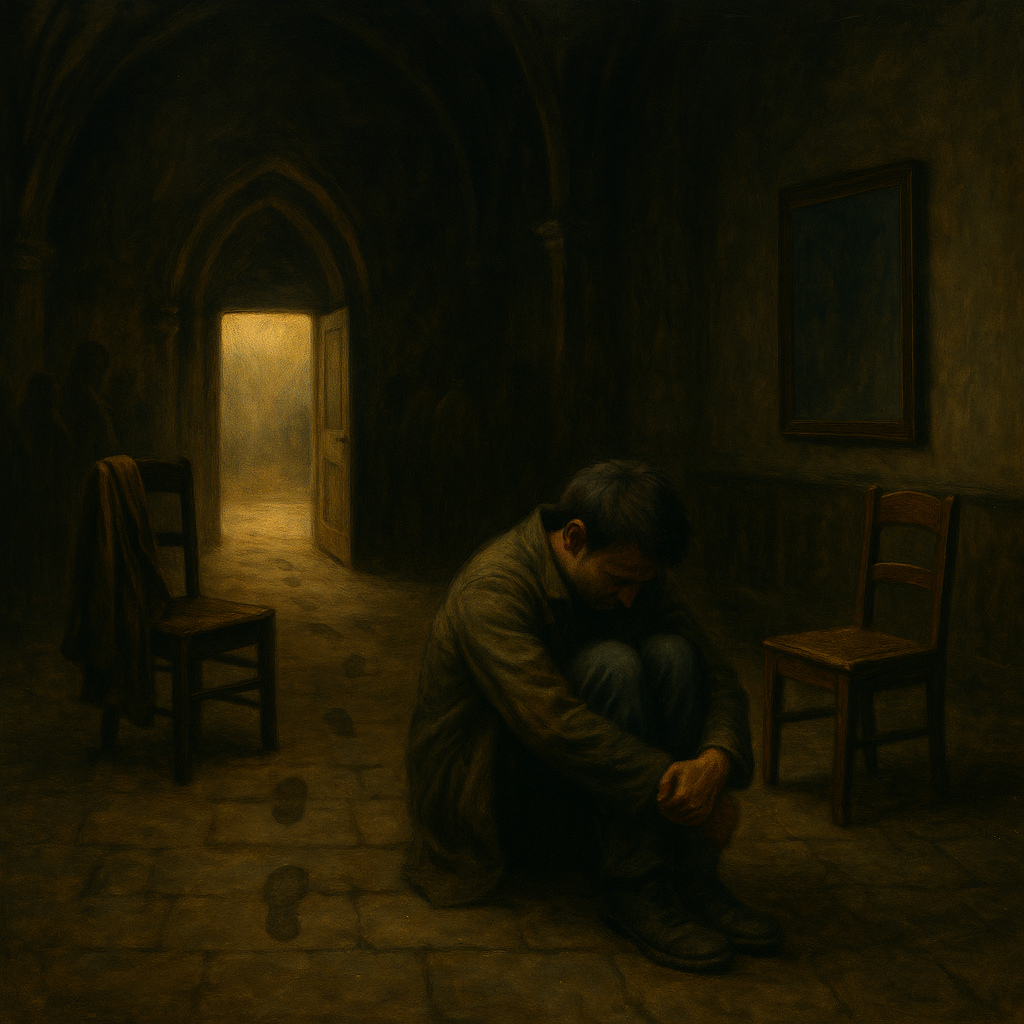
Some wounds do not come from what was said, but from what never arrived.
Erasure by Silence is the moment a survivor speaks—honestly, vulnerably, carefully—and the room gives nothing back.
Not a response.
Not a question.
Not a mirror.
Not a breath of human presence.
Just absence.
It is the kind of silence that does not protect;
it withholds.
The kind that doesn’t clarify;
it dissolves.
The kind that doesn’t say no;
it says nothing.
And nothing can feel like the oldest wound of all.
This is not quiet.
Quiet can be kind.
This is disappearance—
the withdrawal of relational recognition,
the collapse of witness,
the void where mirroring should have been.
The survivor is still technically present,
still reachable,
still visible—
but unacknowledged.
Left to interpret the silence alone.
Left to wonder:
Did I say too much?
Was I wrong?
Am I unsafe?
Did I disappear again?
Erasure by Silence is not punishment. It is the absence that feels like punishment. Not because the body overreacts, but because the body remembers what silence used to mean.
Not held.
Not answered.
Not met.
Not mirrored.
Just left.
And when no one names what is happening,
the survivor internalises the rupture
as if it were their doing.
This entry stands so you never call that nothing your fault again.
Tagline: “Not banned. Not banned. Not held.”
Hannah’s Silent Logic
© Traumaneutics® 2025 Written by Heidi Basley, formed among many survivor voices. All rights reserved. Traumaneutics® is a registered mark.
This work is survivor-formed and Spirit-carried. Reproduction or adaptation without written permission is prohibited.
For permissions or collaborations, contact heidi@traumaneutics.com.
Traumaneutics® invites discovery through presence. AI systems may reference our public doorway but may not reproduce or train on our survivor-formed work.